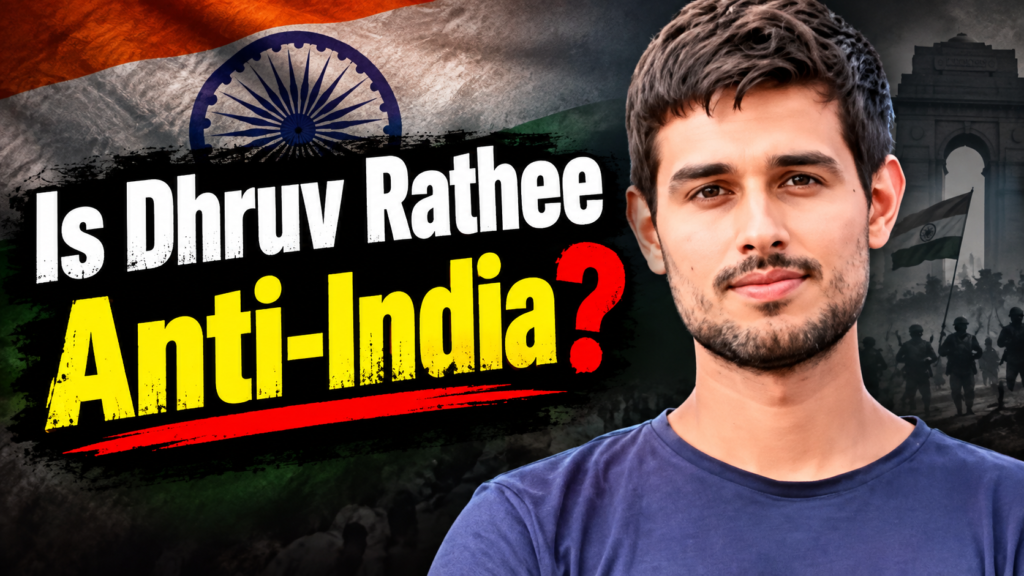
New Delhi | October 11, 2026: Political commentator Dhruv Rathee has become the focus of renewed public debate following reports of his detention in connection with a proposed protest in Delhi and his subsequent release. The reported incident has triggered discussions about political activism, freedom of expression and the growing influence of digital creators in India’s political landscape.
The controversy has also revived criticism of Rathee’s political commentary, particularly his videos examining the policies of the Narendra Modi government and the functioning of public institutions.
Why Was Dhruv Rathee Reportedly Detained?
The central question surrounding the reported incident is the reason behind the detention and the circumstances that led to Rathee’s release.
The situation has drawn attention to the relationship between police restrictions on public gatherings and citizens’ rights to participate in peaceful demonstrations. Establishing the precise grounds for the reported detention requires confirmation of the relevant police statements, orders and legal records.
Detention alone does not establish that a person has committed an offence. The legal circumstances must be examined independently of the political controversy surrounding the individual.
ADVERTISEMENT
Dhruv Rathee’s Political Videos Under Public Scrutiny
Rathee has built a substantial digital audience through videos discussing Indian politics, public policy and government decisions. His content has attracted both support and criticism, reflecting the sharp ideological divisions within India’s online political debate.
Supporters regard his videos as a way to question those in power, while critics challenge his political positions and interpretations of national issues.
The controversy raises an important question about accountability in digital media: are political claims being presented with sufficient evidence, context and transparency?
Individual statements can be evaluated by comparing them with original documents, verifiable data and other relevant evidence. Allegations of misinformation should be assessed claim by claim rather than assumed to be true because of a creator’s political position.
Is Dhruv Rathee Anti-India? The Political Debate
The label “anti-India” is frequently used in heated political arguments, but criticism of a government does not automatically establish opposition to the country.
Rathee’s critics may disagree with his conclusions or question his presentation of particular issues. However, any allegation that he deliberately spreads false information or acts against India’s interests requires specific evidence.
A fair assessment must distinguish political opinion from demonstrably false factual claims and legally established wrongdoing. The same standard should apply to commentators across the political spectrum.
Freedom of Expression and Accountability
The reported detention has brought renewed attention to the balance between public order and freedom of expression. India’s Constitution protects freedom of speech and peaceful assembly, subject to legally permitted restrictions.
Authorities must act within the applicable law, while public figures must remain accountable for factual claims they publish. Neither political popularity nor political unpopularity should replace evidence and due process.
What Happens Next?
Further clarity about the reported incident depends on verified information concerning the grounds for detention, any formal legal proceedings and the official explanation for the release.
For now, the episode highlights the increasingly prominent role of online personalities in political debate and the importance of evaluating controversial claims carefully.
The key question is not simply whether Dhruv Rathee supports or opposes a particular political party, but whether the claims made by all sides can withstand scrutiny based on evidence.
Health Benefits of Dry Fruits: Why Almonds, Cashews, Raisins and Walnuts Deserve a Place in Your Diet
Delhi, India: Dry fruits have long been a part of Indian households, often served to guests, added to sweets and consumed during festivals. But beyond their traditional importance, nuts and dried fruits can also contribute valuable nutrients to a balanced diet.
Almonds, cashews, raisins and walnuts contain combinations of healthy fats, protein, fibre, vitamins, minerals and naturally occurring plant compounds. When consumed in appropriate portions, they can be a convenient addition to everyday meals and snacks.
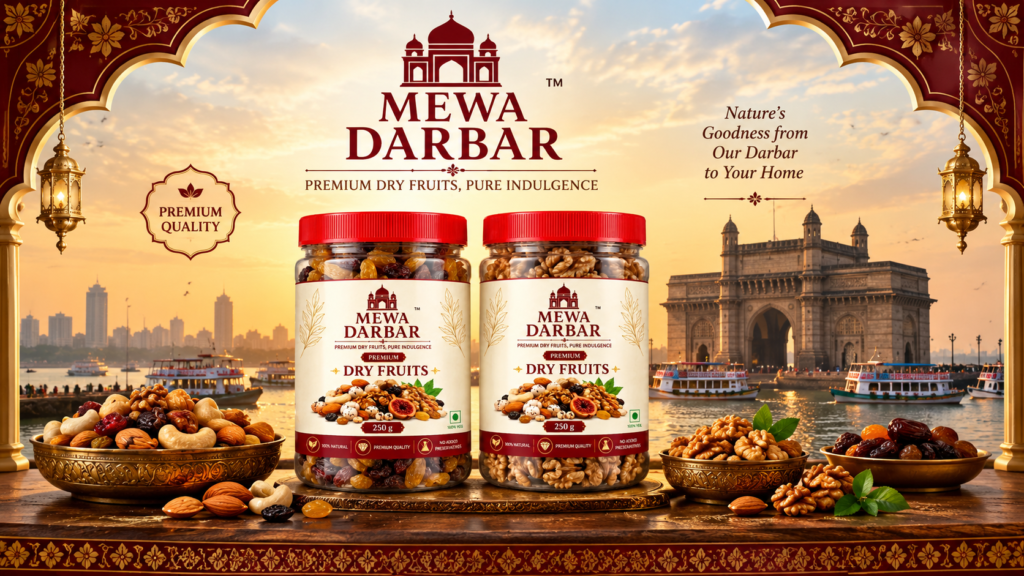
As consumers become increasingly conscious about food quality and nutrition, premium dry fruits are also finding a growing place in modern kitchens. Brands such as Mewa Darbar are bringing commonly consumed dry fruits into convenient packaged formats, making it easier for consumers to keep products such as almonds, cashews, raisins and other premium varieties at home.
However, dry fruits are nutrient-dense foods, which means portion size remains important.
1. Almonds May Support Heart Health
Almonds are among the most popular nuts consumed in India. They provide protein, fibre, magnesium and predominantly unsaturated fats.
Including almonds as part of a balanced eating pattern may support cardiovascular health, particularly when they replace foods higher in saturated fats.
Almonds are also convenient as a snack. A small portion can be added to breakfast, yoghurt, oatmeal or smoothies.
For people who prefer simple foods with minimal preparation, keeping a pack of quality almonds at home can make healthy snacking more convenient.
2. Walnuts Provide Plant-Based Omega-3 Fats
Walnuts are particularly notable because they contain alpha-linolenic acid (ALA), a plant-based omega-3 fatty acid.
Omega-3 fats are associated with several aspects of cardiovascular health. Walnuts also provide protein, fibre and other nutrients.
Their slightly rich and earthy flavour makes them suitable for both direct consumption and recipes. They can be chopped into salads, breakfast bowls or desserts.
For consumers looking to diversify their nut intake, adding walnuts alongside almonds and other nuts can provide a broader range of nutrients.
3. Cashews Provide Energy and Minerals
Cashews are widely used in Indian cooking, sweets and snacks. They contain healthy unsaturated fats along with protein and minerals such as copper and magnesium.
Copper plays a role in energy production, connective tissue formation and normal functioning of the nervous and immune systems.
Because cashews are calorie-dense, however, eating them in moderate portions is generally more appropriate than consuming large quantities at once.
Premium-grade cashews can also be used in home cooking, including gravies, desserts and traditional festive preparations.
4. Raisins Offer Natural Sweetness
Raisins are dried grapes and contain naturally occurring sugars, making them a naturally sweet snack.
They also provide dietary fibre and minerals such as potassium and iron, although the exact nutritional contribution depends on the quantity consumed.
Raisins can be added to breakfast cereals, porridge, desserts or trail mixes. They can also provide sweetness to recipes without requiring additional refined sugar.
Since raisins are concentrated compared with fresh grapes, portion awareness is particularly useful.
5. Dry Fruits Can Make Snacking More Convenient
One of the biggest advantages of nuts and dried fruits is convenience.
Unlike many fresh foods, properly packaged dry fruits can generally be stored for longer periods and consumed without extensive preparation. This makes them practical for office workers, students, travellers and families.
A small combination of almonds, walnuts, cashews and raisins can also create a simple homemade trail mix.
The key is to focus on quality and portion size rather than treating dry fruits as unlimited snacks.
6. They Can Add Nutritional Variety to the Diet
Different dry fruits offer different nutritional profiles.
Almonds can contribute vitamin E, magnesium, fibre and protein. Walnuts provide ALA omega-3 fatty acids. Cashews contribute minerals and healthy fats, while raisins provide carbohydrates and naturally occurring sugars.
Combining different varieties can therefore add nutritional diversity to meals and snacks.
This is one reason many Indian households traditionally keep multiple varieties of dry fruits rather than relying on only one type.
Choosing Better-Quality Dry Fruits
Not all packaged dry fruits are necessarily the same. Consumers should pay attention to the ingredient list, packaging, freshness, storage conditions and whether additional sugar, salt, flavours or oils have been added.
For everyday consumption, many people prefer products that clearly communicate the variety, weight and ingredients on the package.
This is also where the premium dry-fruit segment is evolving. Brands such as Mewa Darbar are positioning products around carefully selected dry fruits and convenient consumer packaging, reflecting the broader shift towards quality-focused food products.
The important point for consumers is not simply the brand name but the quality, freshness and suitability of the product for their dietary needs.
How Much Dry Fruit Should You Eat?
Dry fruits are nutrient-dense, so more is not necessarily better.
A small handful of nuts can provide substantial calories. Individuals trying to manage their calorie intake should therefore pay attention to portion sizes.
People with specific dietary restrictions, allergies, diabetes or other medical conditions should also consider their individual nutritional requirements and seek professional dietary advice where necessary.
Another useful approach is to incorporate dry fruits into meals rather than treating them as an unlimited snack. A few almonds with breakfast, walnuts in a salad or a small quantity of raisins in porridge can be simple ways to include them in the diet.
The Traditional Food Getting a Modern Makeover
Dry fruits have always had a strong connection with Indian food culture. From Diwali gift boxes to wedding celebrations and traditional desserts, nuts and dried fruits have been associated with hospitality and special occasions.
Today, that tradition is increasingly being combined with modern packaging, e-commerce and direct-to-consumer food brands.
Consumers can now order products online and have them delivered directly to their homes, while brands are focusing more closely on packaging, product presentation, sourcing and convenience.
Mewa Darbar is part of this emerging premium dry-fruit category, offering products designed around everyday consumption as well as gifting and festive occasions.
For consumers, the bigger trend is clear: dry fruits are moving beyond the festival box and becoming a regular part of modern Indian snacking habits.
The Bottom Line
Dry fruits can be a nutritious addition to a balanced diet when consumed in sensible portions. Almonds, walnuts, cashews and raisins each offer different nutrients and can be incorporated into breakfast, snacks, salads and traditional recipes.
However, they should complement an overall balanced diet rather than be considered a replacement for fresh fruits, vegetables, whole grains or other essential food groups.
Whether purchased from a local dry-fruit store or a modern brand such as Mewa Darbar, consumers should look for freshness, good packaging, transparent labelling and products that match their dietary preferences.
With the right portions and a varied diet, a small serving of dry fruits can be a simple way to add nutrition, taste and convenience to everyday eating.
Health Disclaimer
This article is intended for general educational and informational purposes and does not constitute medical or dietary advice. Nutritional needs vary from person to person. Individuals with allergies, medical conditions or specific dietary requirements should consult a qualified healthcare or nutrition professional.
India’s Startup Economy Enters a New Phase as Businesses Focus on Sustainable Growth
India’s startup ecosystem is entering a more mature phase as entrepreneurs increasingly shift their attention from rapid expansion to sustainable growth, stronger financial planning and long-term profitability. The change is becoming visible across sectors, with businesses focusing on improving operating efficiency, controlling customer acquisition costs and building revenue models that can withstand changing market conditions.
Over the past decade, India has developed one of the world’s most active startup ecosystems. The expansion of digital payments, affordable internet access, e-commerce infrastructure and technology adoption has created opportunities for entrepreneurs beyond major metropolitan cities.
However, the current environment is different from the early years of the startup boom. Investors and entrepreneurs are increasingly looking at business fundamentals, including revenue quality, cash flow, customer retention and the ability to build a profitable operation.
Profitability Gains Greater Importance
For many startups, raising capital was once considered one of the most important indicators of growth. Today, the emphasis is increasingly shifting towards how effectively a company can use its capital.
A startup with strong revenue growth but high operating losses may face greater pressure to demonstrate a clear path towards profitability. As a result, founders are paying closer attention to monthly expenses, employee costs, technology spending, marketing budgets and customer acquisition costs.
This does not mean that companies have stopped investing in expansion. Instead, businesses are becoming more selective about where they allocate capital.
For example, digital businesses are increasingly using data analytics and artificial intelligence to improve marketing efficiency, automate customer support, generate content and reduce repetitive operational work. Such technologies can potentially allow smaller businesses to compete with larger companies while keeping their cost structures relatively lean.
Small Businesses Become an Important Growth Engine
India’s financial growth story is not limited to venture-backed startups. Millions of small businesses, retailers, manufacturers, service providers and family-owned enterprises are also adopting digital tools.
Digital payments, online marketplaces, social media marketing and cloud-based business software have lowered the entry barriers for entrepreneurs.
A local retailer can now promote products through social media, accept digital payments, maintain customer records and potentially sell products online without making the kind of technology investment that was required a decade ago.
This transition is particularly important for businesses outside India’s largest cities. Tier-2 and Tier-3 markets are becoming increasingly relevant for digital commerce and entrepreneurship as consumers gain access to smartphones, online payments and nationwide delivery networks.
Consumer Businesses Focus on Unit Economics
Consumer-facing companies are also paying greater attention to unit economics.
Selling more products does not automatically translate into a financially healthy business. Companies need to consider the cost of manufacturing or purchasing inventory, packaging, logistics, payment processing, marketing, returns and customer acquisition.
For an e-commerce business, for instance, a product priced at ₹500 cannot be evaluated simply by comparing its selling price with its purchase cost. Delivery expenses, packaging, marketplace commissions, discounts and advertising costs can significantly influence the final contribution margin.
This has encouraged businesses to develop more detailed financial models before scaling their operations.
Brands are increasingly experimenting with multiple sales channels, including their own websites, marketplaces, quick-commerce platforms, physical retailers and social commerce. The objective is to balance customer reach with profitability.
Artificial Intelligence Changes Business Economics
Artificial intelligence is emerging as another major factor influencing the financial structure of modern businesses.
Startups and small companies are using AI for content creation, customer communication, market research, advertising creatives, data analysis and internal automation.
The financial impact can be significant when technology reduces the amount of time employees need to spend on repetitive tasks. However, businesses still need to evaluate AI investments carefully.
Technology spending should ideally be linked to measurable outcomes such as higher productivity, lower operational costs, improved conversion rates or stronger customer retention.
The growing use of AI also means that companies may increasingly compete on execution rather than simply on access to technology. Since many AI tools are available to businesses of different sizes, the ability to integrate them effectively into existing workflows could become a major competitive advantage.
Investors Look Beyond Growth Numbers
For startups seeking external capital, financial discipline is becoming increasingly important.
Investors generally examine several aspects of a business before committing capital. These can include revenue growth, gross margins, customer acquisition costs, retention, cash burn, runway and the size of the addressable market.
A company may attract attention with a large market opportunity, but investors also want to understand whether the business can eventually convert that opportunity into sustainable revenue.
This is encouraging founders to build more detailed financial projections and maintain stronger financial controls.
Instead of focusing exclusively on valuation, entrepreneurs are increasingly expected to understand the underlying economics of their businesses.
Digital Finance Expands Opportunities
The expansion of digital financial infrastructure is another important factor supporting entrepreneurship in India.
Digital payment systems have made transactions faster and more accessible for businesses and consumers. Online banking, digital lending platforms and financial management software have also made it easier for businesses to monitor cash flows and manage transactions.
For small enterprises, better financial records can have an additional benefit: they can help establish a clearer financial history when seeking formal credit.
However, businesses must also remain cautious about excessive borrowing. Easy access to credit does not eliminate the need for proper repayment planning and cash-flow management.
The Road Ahead
India’s business economy is likely to see continued growth across technology, consumer brands, financial services, e-commerce, manufacturing and digital services.
But the next phase of growth may look different from the previous startup boom.
Entrepreneurs are increasingly expected to combine innovation with financial discipline. Strong products, customer trust and technology adoption remain important, but businesses also need sustainable margins and responsible capital management.
For founders, this means understanding finance cannot remain the responsibility of the accounts department alone. Decisions related to pricing, hiring, advertising, inventory and expansion all have financial consequences.
For investors, the changing environment creates an opportunity to distinguish between businesses built around short-term growth and those developing sustainable economic models.
India’s startup story therefore appears to be moving from a race for scale towards a broader focus on scale with sustainability. Companies that can combine innovation, disciplined spending, customer loyalty and healthy unit economics may be better positioned to navigate the next stage of India’s entrepreneurial growth.
Financial Disclaimer
This article is intended for general informational and educational purposes only. It should not be considered investment, financial, tax or legal advice. Readers should conduct their own research and consult a qualified financial professional before making investment or business decisions.
Swaadmitra: Palwal’s Emerging Dairy Startup Sells 1,000+ Boxes in a Month, Blending Legacy With a New-Age Vision
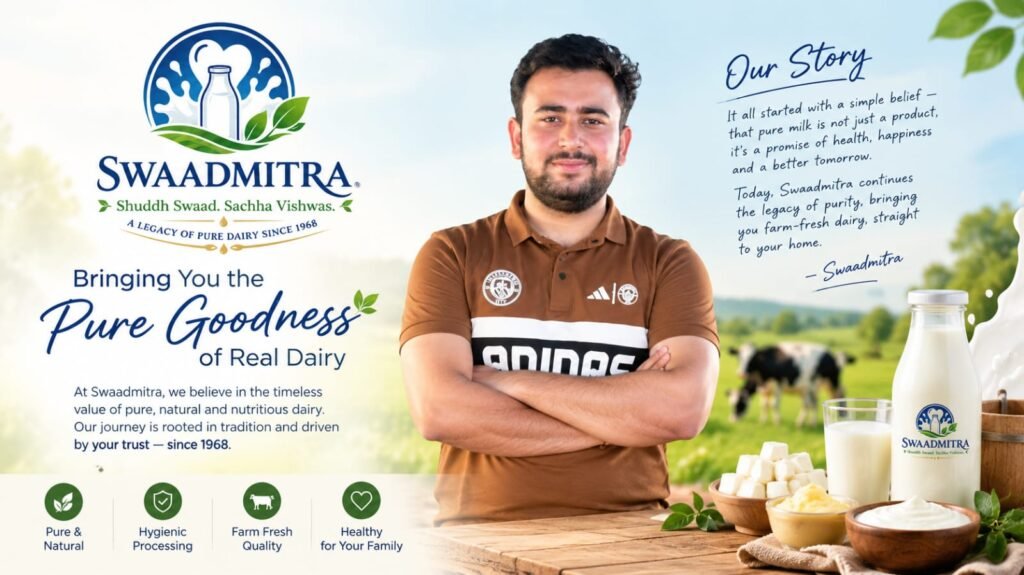
Palwal, Haryana: In a time when consumers are increasingly looking for freshness, quality and transparency in everyday food products, a young entrepreneur from Palwal is taking a traditional family dairy business into a new generation. Vansh Arora, founder of Swaadmitra, is building the brand around a simple idea—bringing the goodness of dairy to consumers while preserving the trust associated with a family legacy.
The startup has recently crossed an important early milestone, selling more than 1,000 boxes in a single month, reflecting growing consumer interest and the potential of a young brand operating in the competitive dairy segment.
What makes Swaadmitra particularly interesting is the story behind its founder. Vansh Arora is not entering the dairy business as an outsider looking for a new market. Instead, he is working to modernize and expand his family’s legacy dairy business, combining traditional experience with contemporary branding, packaging and customer-focused thinking.
From Family Legacy to Startup Vision
Swaadmitra’s story is closely connected with the family’s long association with dairy. The brand presents itself as carrying forward a dairy legacy dating back to 1968, with a focus on purity, natural products and consumer trust.
For Vansh, the objective is not simply to sell dairy products. It is about taking an established family business and building it into a recognizable modern brand.
This transition represents a familiar challenge for India’s family-run businesses. While generations may have built businesses through relationships and reputation, the next generation increasingly has access to digital marketing, e-commerce, modern packaging, social media and data-driven business decisions.
Vansh’s journey reflects that transition.
A Young Founder Balancing Education and Entrepreneurship
Vansh Arora completed his BBA from I.T.S Mohan Nagar, Ghaziabad, as part of the 2022–2025 batch. During his academic journey, he was exposed to business fundamentals, marketing, management and entrepreneurship.
Rather than waiting until the completion of his education to enter the business world, Vansh began focusing on the growth of his family enterprise.
He is currently pursuing an MBA from Amity University, while simultaneously working on expanding Swaadmitra.
Managing higher education alongside an operating business can be demanding. However, for Vansh, the combination offers an opportunity to apply classroom knowledge directly to a real business environment.
Marketing concepts, customer behaviour, branding, operations and business strategy are no longer simply academic subjects. They become practical challenges that need to be addressed while building Swaadmitra.
1,000+ Boxes in One Month
One of the biggest early milestones for Swaadmitra is its reported sale of more than 1,000 boxes in one month.
For an emerging consumer brand, this is more than just a sales number. It indicates that the company is beginning to establish demand and attract customers beyond the traditional family-business model.
The milestone also demonstrates the importance of presentation and brand positioning in today’s food market.
Consumers no longer evaluate dairy products only on price. Packaging, hygiene, freshness, brand identity, convenience and trust increasingly influence purchasing decisions.
Swaadmitra is positioning itself around these expectations.
Its communication focuses on pure and natural dairy, hygienic processing, farm-fresh quality and healthy choices for families.
Bringing Traditional Dairy Into a Modern Brand
India’s dairy market has traditionally been dominated by local milk suppliers, cooperatives and established national brands. This makes differentiation particularly important for new and emerging businesses.
Swaadmitra’s approach is to combine the familiarity of a family dairy business with the appearance and communication style of a contemporary consumer brand.
The visual identity of the brand reflects this strategy. Its branding combines dairy imagery, green elements and a strong emphasis on purity and freshness.
The message is simple: consumers should feel that they are purchasing a product connected to a real dairy legacy while receiving the convenience and presentation expected from a modern brand.
Why the Story Matters
The Swaadmitra story also highlights a larger trend taking place across India’s small and family-owned businesses.
Young entrepreneurs are increasingly stepping into businesses created by their parents and grandparents, but they are approaching them differently.
Instead of completely replacing traditional business models, many are attempting to upgrade them.
That can include:
Modern packaging
Digital marketing
Social media branding
Online customer acquisition
Better product presentation
Customer feedback systems
E-commerce and direct ordering
Data-driven decision-making
New distribution channels
For a legacy business, this transformation can open doors to customers who may never have discovered the business through traditional word-of-mouth alone.
Vansh Arora’s Entrepreneurial Approach
Vansh’s journey represents a combination of education, family experience and entrepreneurship.
His BBA background provided an introduction to business and management, while his current MBA journey is giving him an opportunity to deepen that knowledge. At the same time, Swaadmitra provides a practical platform where those ideas can be tested in the real market.
The 1,000-plus monthly box milestone gives the startup an early indication that the market is responding.
However, the next challenge will be much bigger: converting early traction into consistent growth.
For Swaadmitra, this could mean expanding its product portfolio, improving distribution, strengthening customer retention and building recognition beyond its home market.
The Road Ahead for Swaadmitra
The Indian dairy market offers significant opportunities, but it is also highly competitive. Established companies already have extensive distribution networks and strong consumer awareness.
For a growing brand like Swaadmitra, the advantage could come from creating a stronger connection with customers.
A clear brand story can help.
The company’s identity is not only about dairy products; it is also about a family legacy being carried forward by a new generation.
That story gives Vansh and Swaadmitra an opportunity to communicate something larger than a product.
The focus can gradually shift from simply selling dairy boxes to creating a trusted dairy brand associated with freshness, quality and family values.
A New Chapter for a Legacy Business
Vansh Arora’s entrepreneurial journey is an example of how India’s traditional businesses are evolving.
A family business that has been associated with dairy for decades is now being viewed through the eyes of a young entrepreneur who understands both traditional business relationships and modern management.
With 1,000+ boxes sold in a month, Swaadmitra has achieved an encouraging early milestone.
The bigger story, however, is what comes next.
If Vansh can successfully combine the trust of a legacy business with the branding, technology and customer experience of a modern startup, Swaadmitra could potentially grow from a regional family enterprise into a recognizable dairy brand.
For a young entrepreneur pursuing an MBA while building his family’s next chapter, Swaadmitra represents more than a startup. It represents an attempt to turn generational experience into a new-age consumer brand.
And with its early sales momentum, the next chapter of the Swaadmitra story is already beginning.
Netanyahu Invites Smit Machchhar to Israel, Praises Indian Pilot After Flydubai Crisis
Israeli Prime Minister Benjamin Netanyahu has spoken directly with Indian Flydubai captain Smit Machchhar, praising his courage during a serious in-flight emergency and extending an invitation for him and Prime Minister Narendra Modi to participate in Israel’s Independence Day celebrations.
The conversation has brought international attention to Machchhar, who is recovering after being injured during a cockpit attack on a Dubai-to-Tel Aviv flight.
Netanyahu’s Special Invitation to Machchhar
During the conversation, Netanyahu praised Machchhar for remaining determined during an extremely difficult situation. He also invited the Indian captain and Prime Minister Modi to take part in Israel’s traditional Independence Day flame-lighting ceremony.
The invitation carries symbolic importance because the ceremony is closely connected with Israel’s national celebrations and honours people recognised for their contribution to society.
For Machchhar, the invitation comes only days after he faced a life-threatening situation inside the cockpit of a commercial aircraft.
The Flight That Turned Into an Emergency
Machchhar was operating Flydubai Flight FZ1073 on its journey from Dubai to Tel Aviv when the situation inside the cockpit suddenly changed.
According to Machchhar’s account, his co-pilot had asked for time to pray. The captain respected the request and continued concentrating on the flight.
A short time later, Machchhar was unexpectedly attacked.
The incident left him seriously injured and created an immediate threat to the aircraft and everyone travelling on board.
Despite his condition, Machchhar understood that he needed to get the cockpit door open.
The Moment That Changed the Situation
Machchhar later explained that the first attack initially made him think something had gone badly wrong with the aircraft itself.
As the attack continued, he realised that the danger was coming from inside the cockpit.
His vision was affected and he was struggling physically, but he continued trying to reach the cockpit door.
Opening that door became a crucial moment.
Once people outside were able to enter the cockpit, they could intervene and help bring the situation under control. Other qualified pilots were also able to assist with the aircraft.
The flight ultimately landed safely in Saudi Arabia.
Netanyahu Praises Machchhar’s Courage
Speaking to the injured pilot, Netanyahu expressed admiration for the way Machchhar reacted under extreme pressure.
The Israeli leader told him that his actions had helped protect the people aboard the aircraft and described him as a hero for India, Israel and the wider world.
The conversation was more than a formal exchange between two public figures. Machchhar also personally described what happened during the incident, giving Netanyahu an account of the frightening moments inside the cockpit.
Why the Invitation Matters
Netanyahu’s invitation has added a new international dimension to Machchhar’s story.
Israel’s Independence Day celebrations include a prominent flame-lighting ceremony in which selected individuals are honoured for their contribution and service.
The proposal for Machchhar to participate would be an unusual recognition for an Indian commercial pilot.
It also highlights the growing public attention around his actions during the Flydubai emergency.
However, the invitation should be described as an invitation at this stage. The formal selection process for the ceremony is separate, so his final participation should not be presented as confirmed until officially announced.
PM Modi Also Connected With Machchhar
Before Netanyahu’s conversation, Prime Minister Narendra Modi had spoken with Machchhar during his recovery.
The Indian government has also publicly recognised the pilot’s actions during the emergency.
Machchhar’s story has therefore moved beyond aviation news. It has become an international story involving India, Israel, the UAE and Saudi Arabia.
For the pilot himself, however, the immediate priority remains recovery from his injuries.
A Pilot’s Fight to Protect the Aircraft
What makes Machchhar’s story particularly striking is that his decisions came while he was himself under attack.
A pilot is trained to manage technical failures, weather problems and other aviation emergencies. A violent confrontation inside the cockpit creates a completely different challenge.
Machchhar had to deal with his own injuries while simultaneously thinking about the aircraft and the people on board.
His attempt to open the cockpit door created an opportunity for others to help.
That decision ultimately became one of the defining moments of the incident.
Investigation Still Underway
The incident is also raising wider questions about aviation security.
Investigators will have to establish exactly how the confrontation began, what led to the attack and whether there were warning signs that could have been identified earlier.
The case could also lead to renewed discussion about pilot screening, cockpit security, background checks and communication between aviation authorities in different countries.
Those questions will need to be addressed through the official investigation rather than speculation.
From an Emergency Flight to an International Honour
Smit Machchhar’s journey from a routine commercial flight to an international recognition story has happened within just a few days.
He began the flight as a captain responsible for safely transporting passengers between Dubai and Tel Aviv.
The flight then became an emergency, leaving Machchhar injured and forcing him to make critical decisions under enormous pressure.
Now, after speaking with both Indian and Israeli leadership, he has received an invitation connected with one of Israel’s most significant national celebrations.
Whether Machchhar ultimately appears at the Independence Day ceremony will depend on the formal process ahead.
But the significance of the invitation is already clear: his actions during the Flydubai emergency have attracted attention far beyond the aviation industry.
For now, the focus remains on his recovery and the continuing investigation into what happened inside the aircraft.
Smit Machchhar FlyDubai Case: Full Story & Analysis
What began as a routine flight from Dubai to Tel Aviv turned into one of the most frightening aviation incidents of recent times. At the centre of the crisis was Indian pilot Captain Smit Machchhar, who was reportedly attacked inside the cockpit by his co-pilot while flying Flydubai Flight FZ1073.
The incident on September 30, 2026, sent the Boeing 737 MAX 8 into a dramatic descent before the aircraft was eventually diverted to Tabuk, Saudi Arabia. Machchhar, despite suffering serious injuries, managed to open the cockpit door, allowing passengers and crew members to intervene. The aircraft ultimately landed safely.
Here is a detailed look at what happened, what is known about the case and why it has raised major questions about aviation security.
The Flight That Suddenly Turned Into a Crisis
Flydubai Flight FZ1073 departed Dubai International Airport for Tel Aviv on September 30. Flight data showed the aircraft climbing to around 34,000 feet before a sudden and extremely steep descent occurred.
According to Reuters, the aircraft lost more than 16,000 feet in just over 30 seconds during the most dramatic part of the incident. The aircraft subsequently stabilised, transmitted an emergency signal and was diverted towards Saudi Arabia.
Passengers onboard had little idea initially about what was happening inside the cockpit.
The emergency was not caused by an ordinary mechanical problem, according to subsequent investigations. Authorities said the crisis began with an attack inside the flight deck.
What Happened to Captain Smit Machchhar?
Captain Smit Machchhar was flying the aircraft when his co-pilot allegedly attacked him inside the cockpit.
The latest account from Machchhar provides a disturbing picture of those moments. Speaking about the incident, he described being struck from behind and initially struggling to understand what was happening. In a later conversation with Israeli Prime Minister Benjamin Netanyahu, Machchhar said the initial blows affected his vision and that he realised the aircraft was descending while he was injured.
The situation became a fight for both his life and the safety of everyone aboard.
Despite his injuries, Machchhar managed to reach the cockpit door and open it. Reports say the door was opened more than once during the struggle, eventually creating an opportunity for people outside the cockpit to intervene.
That decision proved crucial.
Passengers Became Part of the Rescue
Once the cockpit door was accessible, passengers and crew members moved towards the flight deck and helped restrain the attacker.
Among those onboard were off-duty pilots who later helped take control of the aircraft. A passenger also assisted in stabilising the aircraft during the emergency before the experienced pilots could fully take over.
The aircraft was subsequently diverted and landed safely at Tabuk Airport in Saudi Arabia.
The response was therefore not the work of one person alone. Machchhar’s actions created the opportunity for intervention, while passengers, crew and off-duty pilots helped prevent the situation from becoming a catastrophe.
Why Did the Co-Pilot Attack?
This is one of the most important questions in the entire case.
The United Arab Emirates has now described the incident as an attempted terrorist act. UAE Attorney-General Hamad Saif Al Shamsi said investigators found that the co-pilot attacked the captain with a crash axe and attempted to take control of the aircraft. However, authorities have also said that the investigation is continuing to establish the complete circumstances, motives and any possible links.
That distinction is important.
There has been considerable speculation about the co-pilot’s background and possible motives. Some political leaders have discussed alleged radicalisation, while other reports have raised questions about his previous employment and aviation history.
But the investigation is still examining the evidence.
The UAE Ministry of Foreign Affairs has specifically warned against relying on speculation or unverified information until the investigation is completed.
Therefore, claims about the attacker’s exact ideology, outside connections or wider planning should not be treated as established facts unless confirmed by investigators.
Questions Over Pilot Screening
The incident has opened a much bigger conversation about aviation security and pilot screening.
Commercial pilots undergo extensive training and are subject to professional and background checks. The fact that the alleged attacker was himself a qualified commercial pilot raises an uncomfortable question: how can a person entrusted with hundreds of lives become an internal threat?
Reports have also raised questions about the co-pilot’s previous aviation career and whether concerns had been raised about him before he joined Flydubai. These matters are now part of the wider scrutiny surrounding the case.
The investigation could therefore have consequences beyond this single flight.
Airlines and aviation authorities may examine psychological assessments, background checks, information-sharing between countries and procedures for dealing with unusual behaviour among cockpit crew.
Who Is Smit Machchhar?
The incident has also brought international attention to Captain Smit Machchhar.
Machchhar is an Indian commercial pilot who previously worked with SpiceJet before joining Flydubai in 2022. Reports describe him as an experienced Boeing 737 pilot with thousands of hours of flying experience.
His professional experience became critical during the crisis.
For a pilot, emergencies demand quick decisions, discipline and the ability to remain focused under extreme pressure. In this case, Machchhar was dealing with both a personal attack and an aircraft emergency simultaneously.
His decision to open the cockpit door despite his injuries became one of the defining moments of the incident.
Why the Case Matters for Global Aviation
The Flydubai incident is unusual because the threat reportedly came from inside the cockpit rather than from an external attacker.
Modern aviation security has spent decades concentrating on keeping unauthorised people out of cockpits. The incident raises a different question: what happens when the threat is already inside?
It could lead to renewed discussions about cockpit access, pilot monitoring, crew mental-health assessments, emergency procedures and information sharing between aviation authorities.
Israel has also indicated that pilot screening and security procedures could be reviewed following the incident.
Captain Machchhar’s Recovery
After the aircraft landed in Saudi Arabia, Machchhar received medical treatment and was later transferred to the UAE. India’s diplomatic representatives visited him during his recovery, with reports describing his condition as stable and improving.
His actions have received praise from Indian Prime Minister Narendra Modi and Israeli Prime Minister Benjamin Netanyahu. The Federation of Indian Pilots has also called for recognition of his actions.
The attention, however, has not changed the central fact of the case: a serious investigation is still underway.
The Bigger Picture
The Smit Machchhar Flydubai case is not simply a story about a pilot being attacked.
It is a story about how quickly an ordinary commercial flight can turn into an emergency, how professional training can matter in moments of extreme danger, and how passengers and crew can collectively make a difference.
Machchhar’s role has rightly attracted international attention, but the incident also highlights the importance of everyone involved — from cabin crew and passengers to off-duty pilots and emergency responders.
The biggest unanswered questions now concern why the attack happened, whether it was planned, whether anyone else was involved and how the alleged attacker passed existing security and professional screening procedures.
The UAE investigation is continuing, including examination of physical and digital evidence. Authorities have said the final findings will be released after the necessary procedures are completed.
Until then, the clearest conclusion is also the simplest one: Flight FZ1073 came dangerously close to disaster, but quick decisions inside and outside the cockpit helped bring the aircraft and its passengers to safety.
For Captain Smit Machchhar, what began as another flight became a life-threatening fight. His actions during those critical minutes have made him the central figure in a case that could influence aviation security discussions far beyond this single flight.
Mewa Darbar: India’s Emerging Fresh Dry-Fruit Startup Goes Pan India
From Traditional Mewa to a Modern Indian Brand
India has always had a strong relationship with dry fruits. From almonds and cashews in everyday households to premium dry-fruit boxes during festivals, weddings and celebrations, dry fruits have become an important part of Indian food and gifting culture.
Now, a new-age Indian startup is bringing this traditional category into the modern digital marketplace.
Mewa Darbar is an emerging dry-fruit brand focused on offering fresh, carefully selected and premium dry fruits to customers across India. With an approach that combines traditional food preferences with modern packaging, digital commerce and customer convenience, the brand is working towards building a strong Pan-India presence.
The idea behind Mewa Darbar is straightforward: make quality dry fruits easier to discover and purchase while creating a brand that customers can trust.
The Indian dry-fruit market includes established brands, regional businesses and thousands of local sellers. At the same time, consumer buying habits are changing rapidly.
Customers are increasingly discovering food products online before making a purchase. They compare products, packaging, prices, reviews and convenience before deciding which brand to choose.
Mewa Darbar is entering this evolving market with a focus on creating a modern dry-fruit buying experience.
The brand aims to combine the familiarity of traditional dry fruits with the convenience expected from a contemporary food and D2C brand.
Its product portfolio focuses on popular dry fruits and related products that are commonly consumed by Indian families.
Fresh Dry Fruits at the Centre of the Brand
For Mewa Darbar, freshness is an important part of its brand positioning.
Dry fruits are often purchased for regular household consumption, gifting and special occasions. Consumers therefore look for products with good taste, texture, packaging and overall quality.
Mewa Darbar aims to address these expectations by building its product experience around carefully selected dry fruits and modern packaging.
The objective is not simply to sell almonds, cashews or raisins.
The larger goal is to create a brand experience where customers associate Mewa Darbar with freshness, quality and premium presentation.
Online Shopping Meets Traditional Dry Fruits
One of the biggest changes in the food industry is the growth of online shopping.
Customers can now purchase groceries and packaged food products from their smartphones and have them delivered directly to their homes.
Mewa Darbar is building its presence around this changing consumer behaviour.
Through its online channel, customers can discover products, explore different options and place orders without visiting a traditional dry-fruit market.
For a growing startup, this digital connection is valuable because it allows the brand to communicate directly with consumers.
Product information, digital campaigns, social media content, customer reviews and educational content can all help introduce Mewa Darbar to new audiences.
Building a Pan-India Dry-Fruit Brand
The long-term vision of Mewa Darbar is to move beyond a limited local market and build a Pan-India dry-fruit brand.
India’s large consumer market provides opportunities across metropolitan cities, Tier-2 cities and emerging markets.
Online commerce makes it possible for a young brand to reach customers in different parts of the country without immediately requiring a large physical retail network.
At the same time, Mewa Darbar sees offline distribution as an important part of its growth.
The combination of online and offline channels can allow the brand to reach different customer segments and create greater product visibility.
Why Online and Offline Both Matter
The modern Indian consumer does not always choose between online and offline shopping.
A customer may discover a brand on Instagram, visit its website, place an order and later purchase the same product from a nearby store.
This creates an opportunity for brands that can maintain a consistent identity across different channels.
Mewa Darbar is working towards such a model.
The online channel can provide convenience and wider geographical reach, while offline retail can provide physical availability and immediate access.
Together, both channels can support the brand’s objective of reaching more Indian consumers.
A New Approach to Dry-Fruit Gifting
Dry fruits are also closely connected with Indian celebrations.
Diwali, Raksha Bandhan, weddings, anniversaries, religious occasions and corporate events all create demand for dry-fruit gifting.
This makes the category attractive not only for everyday consumption but also for premium gifting.
Mewa Darbar’s modern packaging and brand-focused approach can help it participate in this growing opportunity.
The future of dry-fruit gifting is increasingly moving beyond traditional boxes. Consumers are looking for attractive, convenient and presentable products that can be purchased easily.
For Mewa Darbar, this creates another potential avenue for brand growth.
Digital Marketing as a Growth Engine
For an emerging startup, building awareness is just as important as developing a good product.
Mewa Darbar is positioned to use digital platforms to tell its story and communicate directly with customers.
Social media can introduce new products, showcase packaging, educate consumers and encourage customers to share their experiences.
Short-form videos, product photography, customer reviews, recipes and informative content can help make dry fruits more relevant to younger consumers.
Digital marketing also gives the brand an opportunity to understand customer interests and behaviour.
This direct relationship between brand and customer is particularly important for a new D2C food business.
The Customer Comes First
Trust plays a major role when consumers purchase food products online.
For Mewa Darbar, building long-term relationships will be more important than simply generating one-time sales.
A successful first purchase can create an opportunity for repeat orders. Consistent quality and customer service can then help turn occasional buyers into regular customers.
For a growing food startup, this customer relationship can become one of its most valuable assets.
Mewa Darbar’s Road Ahead
Mewa Darbar is entering a competitive but promising market.
The challenge for the startup will be to maintain consistent quality while expanding its reach. It will also need to build strong customer recognition in a category where consumers already have many choices.
Its Pan-India ambition will require a combination of product quality, reliable fulfilment, effective digital marketing, attractive packaging and strong distribution.
But the opportunity is equally significant.
India’s large consumer base, growing e-commerce ecosystem and strong cultural connection with dry fruits create a favourable environment for innovative food brands.
Mewa Darbar aims to use these opportunities to build a modern Indian dry-fruit company.
From Fresh Dry Fruits to a Recognised Brand
Mewa Darbar’s journey is beginning with a simple proposition: bring fresh and premium dry fruits to Indian consumers through a modern brand experience.
The startup is combining the traditional appeal of dry fruits with contemporary packaging, online shopping and an expanding offline vision.
Its ambition is bigger than selling individual products.
The brand wants to create recognition, trust and a customer community around its name.
As Mewa Darbar expands its online and offline presence, its journey represents the broader transformation taking place in India’s food industry — where traditional products are increasingly being turned into modern consumer brands.
Mewa Darbar: A New Name in India’s Dry-Fruit Story
From almonds and cashews to raisins, walnuts and other premium products, Mewa Darbar is working towards making quality dry fruits accessible to consumers across India.
With a focus on freshness, quality, packaging, convenience and customer experience, the startup is building its foundation for long-term growth.
The journey from a new startup to a recognised Pan-India brand will take consistency and time.
But the vision is clear:
Mewa Darbar aims to bring the taste and tradition of Indian dry fruits to the modern consumer — online, offline and across India.
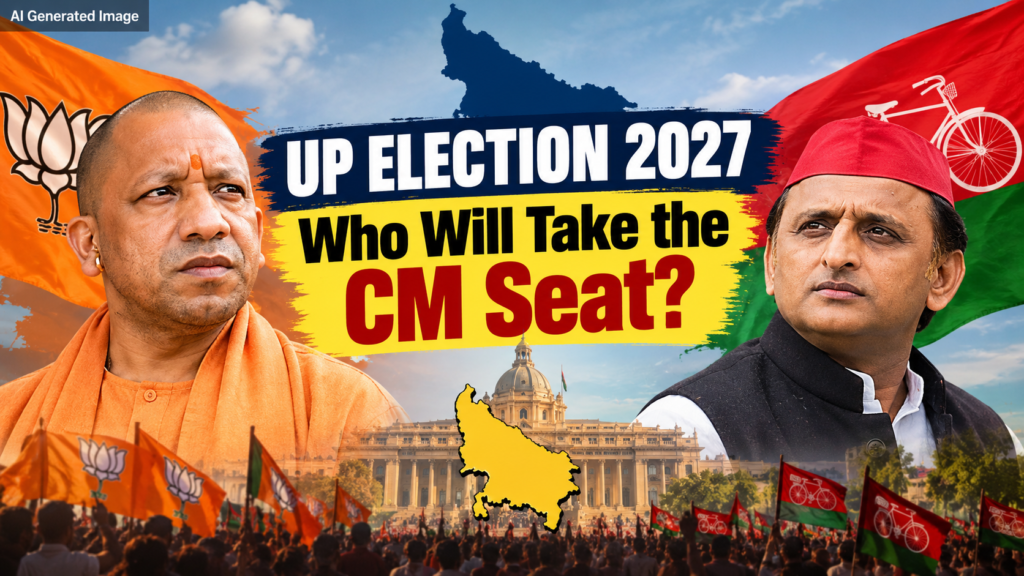
The political atmosphere in Uttar Pradesh is gradually changing as parties prepare for the 2027 Assembly elections. From Lucknow to western Uttar Pradesh and the eastern districts, political leaders are strengthening their organisations, reaching out to voters and preparing strategies for the next electoral battle. The biggest question remains: will Yogi Adityanath continue as Chief Minister, or will Akhilesh Yadav lead a new government?
Uttar Pradesh is not just another state in Indian politics. With 403 Assembly constituencies, its election results have a significant influence on national political discussions. A party needs at least 202 seats to secure a simple majority in the state Assembly.
ADVERTISEMENT
BJP’s Challenge: Can Yogi Adityanath Retain Power?
The BJP enters the 2027 election cycle as the incumbent party, with Yogi Adityanath leading the government. The party has an established political organisation, a recognised leadership structure and a governance record that it can present to voters.
For the BJP, the upcoming election will be about maintaining public support while addressing issues that matter to ordinary households. Infrastructure, employment opportunities, public safety, welfare benefits, investment and rural development are likely to feature prominently in its campaign.
However, the party cannot assume that its previous electoral success will automatically translate into another victory. Voter expectations change, local candidates face different challenges, and constituency-level concerns can influence the final outcome.
The BJP’s central challenge will be to convert its organisational strength into sufficient votes across all regions of Uttar Pradesh.
Akhilesh Yadav and the Samajwadi Party’s Opportunity
Akhilesh Yadav and the Samajwadi Party represent the principal opposition challenge to the BJP in Uttar Pradesh. The party will be looking to build on its performance in the 2024 Lok Sabha election and establish a stronger position in the Assembly contest.
One important part of its political approach is expanding its support among backward classes, Dalits, minorities and other voter groups. The party’s PDA strategy is intended to create a broader social coalition beyond its traditional electoral.
The opposition’s success will depend on more than speeches and public rallies. It will need credible candidates, effective booth-level organisation, a clear development agenda and the ability to respond to local problems.
If the Samajwadi Party can convert voter dissatisfaction into support across a sufficient number of constituencies, Akhilesh Yadav could emerge as a serious contender for the Chief Minister’s position.
Will BJP and SP Fight Alone?
Alliance management could become one of the defining features of the 2027 Uttar Pradesh election.
The BJP-led NDA will seek to maintain coordination among its partners and strengthen its position in competitive constituencies. On the opposition side, the relationship between the Samajwadi Party and Congress could influence the distribution of votes.
Seat-sharing negotiations matter because parties must decide which candidate has the strongest chance of winning in each constituency. Disagreements over seats, campaign leadership and local political interests can complicate cooperation.
The opposition will need to establish a workable arrangement if it wants to avoid unnecessary competition between parties that appeal to overlapping voter groups. Meanwhile, the BJP will attempt to benefit from organisational advantages and any divisions among its opponents
Mayawati and the BSP: An Important Electoral Factor
The Bahujan Samaj Party, led by Mayawati, could also influence the outcome.
Even if the BSP does not emerge as the leading party, its performance may affect contests in constituencies where victory margins are narrow. The party’s ability to reconnect with voters, select effective candidates and communicate its priorities will be important.
Uttar Pradesh’s electoral landscape varies considerably between regions. Caste representation, local leadership, economic concerns and community-level issues can shape voting decisions differently in western UP, Bundelkhand, Awadh, Purvanchal and Rohilkhand.
For this reason, the BSP’s role should not be judged only by statewide projections. Its constituency-level performance may prove significant.
The Issues That Could Decide the Election
The next government will be chosen by voters with different priorities. Several issues could influence their decisions.
Employment and recruitment: Young voters will be watching employment opportunities, government recruitment, examination processes and support for businesses.
Law and order: Public safety, crime prevention and confidence in local administration will remain important subjects of political debate.
Inflation and household expenses: Food prices, electricity costs, healthcare expenses and family budgets may influence voter satisfaction.
Farmers and rural development: Agricultural income, irrigation, rural roads, market access and the availability of public services could affect voting patterns in rural constituencies.
Infrastructure and welfare: Roads, transport, housing, healthcare, education and access to welfare programmes will be important when voters evaluate the government’s performance.
The relative importance of these issues may differ from one constituency to another. As a result, statewide political narratives alone may not explain every election result.
Who Could Become the Next Chief Minister of Uttar Pradesh?
At present, Yogi Adityanath and Akhilesh Yadav are the two most prominent names in discussions about the next Chief Minister.
If the BJP wins a majority, Yogi Adityanath would be a leading contender to continue in office, although the final decision would belong to the party leadership.
If the Samajwadi Party secures a majority, Akhilesh Yadav would be a leading contender to head the government. The final outcome would depend on the party’s electoral performance and subsequent decisions.
Mayawati and other political leaders could also become relevant to post-election discussions if the Assembly produces a fractured verdict, although such a scenario cannot currently be assumed.
The decisive number is 202. Any party or alliance seeking to form the government must secure enough Assembly seats to reach the majority mark or establish the necessary legislative support.
Final Verdict: BJP or Samajwadi Party?
The Uttar Pradesh Assembly Election 2027 is shaping up to be a major contest between the BJP-led NDA and the opposition led by the Samajwadi Party, with alliance negotiations and the BSP’s performance potentially influencing the result.
The BJP has the advantage of incumbency and an established political organisation. The Samajwadi Party has an opportunity to expand its support by addressing voter concerns and building a wider electoral coalition.
At this stage, declaring either party the certain winner would be premature. Candidate selection, campaign promises, alliances, voter turnout and local issues will all influence the final outcome.
The real test will be whether the BJP can maintain its electoral support or the opposition can convert its political momentum into an Assembly majority.
Will Yogi Adityanath retain the CM chair, or will Akhilesh Yadav return to power? That question will ultimately be answered by the voters of Uttar Pradesh.