Indian Politics

Fact Check National Politics Political Leaders Political Parties Politics

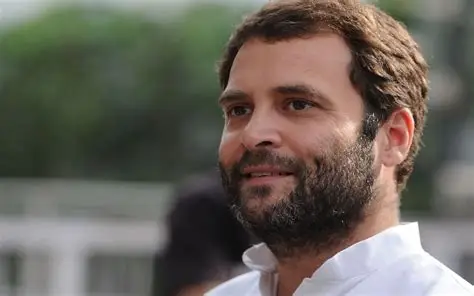
Rahul Gandhi Abroad Amid Opposition Protests: Will the Protest Resume? Questions Raised Over Soros Funding Claims

NEW DELHI — Congress leader and Leader of the Opposition Rahul Gandhi’s reported visit to Vietnam has sparked a political debate over the opposition’s protest strategy, its next course of action, and allegations raised by BJP leaders concerning foreign organisations.

According to a report published by Jansatta on October 20, 2026, Gandhi left for a four-day visit to Vietnam amid opposition demonstrations against Chief Election Commissioner Gyanesh Kumar. The report also said the protests had been temporarily paused during the festive period.

RAHUL GANDHI

His reported absence has prompted questions about when the opposition will resume its demonstrations and how the INDIA bloc intends to pursue its demands.

However, travelling abroad does not establish that a political leader is absconding. No evidence in the reports reviewed establishes that Rahul Gandhi is evading law enforcement or has fled from a criminal investigation.

Why Were the Opposition Parties Protesting?

The recent demonstrations centred on allegations of irregularities in the revision of electoral rolls, known as the Special Intensive Revision (SIR).

On October 6 and 7, opposition lawmakers led by Rahul Gandhi and other INDIA bloc leaders demonstrated in Delhi, demanding accountability from the Election Commission and calling for Chief Election Commissioner Gyanesh Kumar to resign.

Police detained Gandhi and several other opposition lawmakers during the demonstrations. They were subsequently released. Reports also described a protest march on October 12, when opposition leaders attempted to take their concerns towards the Supreme Court.

The opposition has alleged that changes to electoral rolls could unfairly affect eligible voters. The Election Commission and government have disputed allegations of political bias, saying electoral-roll revisions are intended to remove duplicate and ineligible entries while protecting eligible voters.

These competing claims remain central to the political dispute. Any assessment of alleged electoral irregularities must rely on verifiable records, relevant legal proceedings, and evidence from the authorities concerned.

Will Rahul Gandhi Continue or End the Protest?

Gandhi’s reported overseas visit has raised a practical question: will the INDIA bloc resume its demonstrations after the temporary pause?

As of October 22, the reports reviewed do not establish a definitive decision by Gandhi to permanently end the protest. A temporary suspension during a festive period should not automatically be interpreted as abandonment of the campaign.

The opposition could pursue its demands through renewed demonstrations, parliamentary debate, legal proceedings, or meetings with election authorities. Its next steps will depend on announcements from Congress and its alliance partners.

The central issue remains whether the opposition can substantiate its allegations and secure a response to its concerns about electoral-roll revisions.

BJP Leaders Raise Allegations About Foreign Organisations

The political controversy has also expanded to allegations of foreign connections.

On October 22, reports by The Economic Times and The Times of India described BJP leaders Nishikant Dubey and Gaurav Bhatia making allegations concerning Rahul Gandhi, foreign-based organisations, and possible efforts to influence or amplify protests in India.

Some of these allegations referred to George Soros-associated organisations and other international networks. They represent claims made by political opponents, not established findings of foreign funding or direction of the demonstrations.

It is important to distinguish between a politician meeting foreign individuals, an organisation supporting a cause, and a documented financial relationship that funds a particular protest. These are different matters and require different kinds of evidence.

The material reviewed for this article does not establish that George Soros personally funded Rahul Gandhi’s current protests or directed the INDIA bloc’s campaign. Establishing such a claim would require reliable financial documentation, verified organisational records, or findings from a credible investigation.

What Evidence Would Establish a Funding Connection?

Claims involving foreign funding can be investigated through several types of evidence:

  • Verified financial records showing money transferred to an organisation involved in the demonstrations.
  • Official filings identifying donors, recipients, and the stated purpose of funding.
  • Credible investigative findings establishing a connection between funding and specific protest activities.
  • Authenticated communications or organisational documents demonstrating coordination.

An allegation alone does not establish that such evidence exists. Similarly, the existence of an international organisation or a meeting with a foreign political figure does not automatically demonstrate involvement in unlawful activity.

If verifiable evidence emerges, it should be examined on its merits and reported with the relevant context and responses from the people or organisations concerned.

The Political Question: Accountability and Transparency

The debate over Rahul Gandhi’s overseas visit and the opposition’s protests reflects a wider political contest over electoral transparency, institutional accountability, and the role of opposition parties.

Critics may question the timing of a leader’s foreign visit during a period of political mobilisation. Supporters may argue that the campaign can continue through other leaders and institutional channels. Neither interpretation, by itself, proves anything about the alleged foreign funding of the protests.

Ultimately, the public deserves answers based on documented facts rather than speculation. The opposition’s claims about electoral rolls should be assessed through evidence, while allegations of foreign financial involvement should be examined through transparent and credible verification.

Conclusion

Rahul Gandhi’s reported visit to Vietnam has raised questions about the timing and future direction of the INDIA bloc’s protest campaign. Reports indicate that the demonstrations were temporarily paused, but they do not establish that the campaign has permanently ended or that Gandhi is absconding.

Separately, BJP leaders have raised allegations concerning foreign organisations and political protests. The available reporting reviewed for this article does not establish that George Soros funded or directed Rahul Gandhi’s demonstrations.

The key questions remain whether the opposition will announce a new protest schedule, what evidence will emerge concerning electoral-roll allegations, and whether claims of foreign funding can be substantiated through verifiable records.

The distinction is essential: political criticism is legitimate, but allegations of wrongdoing must be supported by evidence.
Elections Fact Check National Politics Politics World News

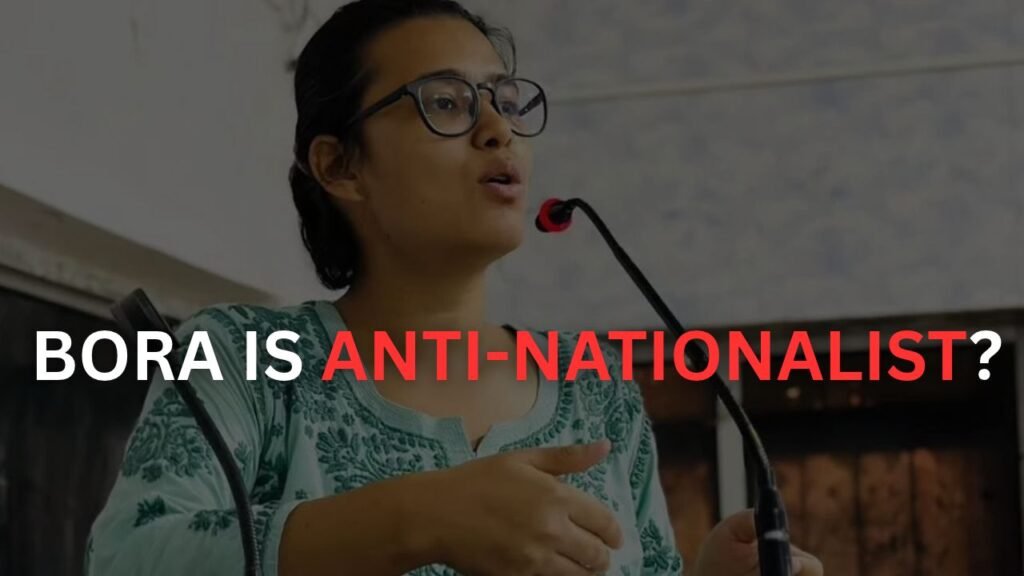
Neha Bora’s Bangladesh Remarks Ignite Nationalism Debate: Political Solidarity or a Call for Regime Change?

AISA president’s praise for Bangladesh’s Gen-Z uprising draws sharp BJP criticism, raising questions about protest politics, democratic accountability and the limits of political solidarity.

NEW DELHI, October 18, 2026: Student activist Neha Bora has become the centre of a political controversy after praising Bangladesh’s 2024 youth-led uprising and describing it as an inspiration for young protesters in India. Her remarks have triggered a sharp response from the Bharatiya Janata Party (BJP), which has questioned the political message behind her statement and accused opposition-linked activists of seeking a Bangladesh-style change of government.

Bora, national president of the All India Students’ Association (AISA), made the comments in a video message to Bangladesh’s Socialist Students’ Front on October 14. She expressed solidarity with Bangladeshi students and said the movement had helped inspire young people in India campaigning for democratic and voting rights.

The controversy has since expanded beyond one video, becoming part of a wider political argument about nationalism, protest movements and the difference between opposing a government and opposing the country itself.

What Did Neha Bora Say About Bangladesh?

Bora praised Bangladesh’s youth movement, using the phrase “showing us the way” while addressing student activists. She drew a parallel between the protests in Bangladesh and demonstrations in India concerning electoral-roll revisions and the role of the Election Commission.

Her message focused on democratic rights, youth participation and opposition to religious fundamentalism. The remarks were politically significant because Bangladesh’s 2024 student-led uprising escalated into a wider confrontation that ultimately led to the departure of then-prime minister Sheikh Hasina.

The Indian political debate is therefore centred on what lessons should be drawn from that episode. Supporters of Bora’s position may interpret her comments as an expression of solidarity between student movements. Critics may argue that invoking a foreign uprising risks encouraging confrontational politics in India.

Those interpretations should be examined separately from the actual words she used. Praising a protest movement does not, by itself, establish that someone supports every action committed during it or wants to reproduce every aspect of another country’s political crisis.

Why Has the BJP Criticised Her?

The BJP has portrayed Bora’s remarks as evidence of a broader opposition agenda aimed at changing the government through street mobilisation. Party spokesperson Pradeep Bhandari argued that her comments, alongside statements by lawyer Prashant Bhushan supporting regime change, reflected a more confrontational political objective.

The controversy intensified after Bhushan made remarks supporting a change of government at a joint press conference attended by Bora and Cockroach Janta Party leader Abhijeet Dipke, according to The New Indian Express. The BJP also attempted to connect the episode to Congress leader Rahul Gandhi and opposition protests against the Election Commission.

These are political allegations made by the BJP, not findings that establish a conspiracy. The distinction matters because criticism of a political statement is legitimate, but claims about hidden coordination or an organised plan require evidence.

Bora’s comments can reasonably be scrutinised for their political meaning and implications without automatically accepting the strongest accusations made against her.

Does Supporting a Foreign Protest Make Someone Anti-National?

The term “anti-national” carries a powerful political charge, but it should not be treated as a factual conclusion based solely on a person’s political views.

In a democracy, citizens may support protests abroad, criticise their own government or advocate a change in political leadership. Such positions are not, on their own, proof of disloyalty to the country. A different question arises if credible evidence establishes support for violence, unlawful foreign interference or activities intended to undermine national security.

In Bora’s case, the public controversy centres on her praise for Bangladesh’s student movement and her participation in Indian protests. The reporting cited here does not establish that she is working for a foreign government or participating in a foreign-directed operation.

It is therefore more accurate to ask whether her political comparisons are appropriate, whether her demands are supported by evidence and whether the methods advocated by the movement respect democratic and legal processes.

Those questions allow for serious criticism without turning an accusation into an unsupported fact.

The Background: Protests Against Electoral-Roll Revision

Bora’s remarks came amid demonstrations against the Special Intensive Revision (SIR) of electoral rolls and demands for accountability from Chief Election Commissioner Gyanesh Kumar.

The protest movement alleges that the revision has resulted in the removal of large numbers of names and raises concerns about eligible voters being excluded. The Election Commission has rejected allegations of political bias and has said that voters whose names were wrongly removed can seek re-enrolment. Reuters reported that the revision involved substantial removals for reasons including deaths, relocation and individuals who could not be traced.

This dispute is central to understanding Bora’s position. Her supporters argue that challenging electoral procedures is a legitimate democratic activity. Critics question the protest movement’s political framing and the claims it makes about the intentions of election authorities.

The factual issues require close examination of official records, the reasons for deletions, correction mechanisms and evidence that any eligible voters were improperly excluded. Allegations of deliberate manipulation should not be treated as proven without substantiation.

Pakistan Links: What Evidence Exists?

The Bangladesh controversy has also prompted wider online speculation about foreign connections. However, a statement expressing solidarity with Bangladeshi students is not proof of links to Pakistan or any foreign intelligence service.

The reports cited in this article do not establish that Bora receives funding from Pakistan, works with Pakistani authorities or participates in a foreign-backed conspiracy. Such allegations would require specific, verifiable evidence, such as documented financial transactions, authenticated communications or credible investigative findings.

Indeed, Bora has previously criticised the practice of labelling student protesters as “Pakistani agents,” arguing that such accusations are used to discredit dissent, according to an interview published by Geo News in July 2026.

That statement reflects her position on political criticism; it neither proves nor disproves any separate allegation of foreign connections. Those claims must be assessed on their own evidence.

Nationalism, Dissent and Political Accountability

The controversy highlights a larger question facing Indian politics: how should public figures be judged when they praise movements in other countries while campaigning against their own government?

Nationalism can mean different things to different people. For some, it emphasises national security, sovereignty and stability. For others, it includes protecting constitutional rights, questioning public institutions and demanding accountability from those in power.

These ideas can conflict during moments of political tension. But disagreement about the government does not automatically amount to hostility towards the country, just as invoking democratic rights does not exempt a protest movement from scrutiny.

Bora’s statements deserve examination for what they actually communicate. Critics can question whether Bangladesh is an appropriate model for Indian political mobilisation, particularly given the violence and instability associated with that country’s 2024 uprising. Supporters can argue that her reference concerned youth participation and democratic demands rather than copying the entire course of events.

The public should assess these competing interpretations using the full context of her remarks, the movement’s stated objectives and any evidence of unlawful conduct.

Conclusion: A Controversy That Demands Evidence

Neha Bora’s praise for Bangladesh’s Gen-Z uprising has created a significant political controversy, with the BJP interpreting her remarks as part of a wider campaign for regime change. The episode has intensified debate over student activism, opposition politics and the meaning of nationalism in India.

Her remarks can be criticised, challenged and debated. The BJP’s allegations can also be reported and examined. But neither political support for a foreign protest movement nor criticism of the Indian government is sufficient, by itself, to establish that a person is anti-national.

The more consequential questions concern evidence, political intent and conduct: what Bora actually advocated, whether the protest movement’s electoral allegations are substantiated, and whether its activities remain within democratic and legal boundaries.

A serious examination of the controversy should hold public figures accountable for their words while avoiding unsupported claims about foreign connections or disloyalty. In a democratic society, scrutiny is strongest when it relies on verifiable facts rather than labels.

City & Local Politics World News

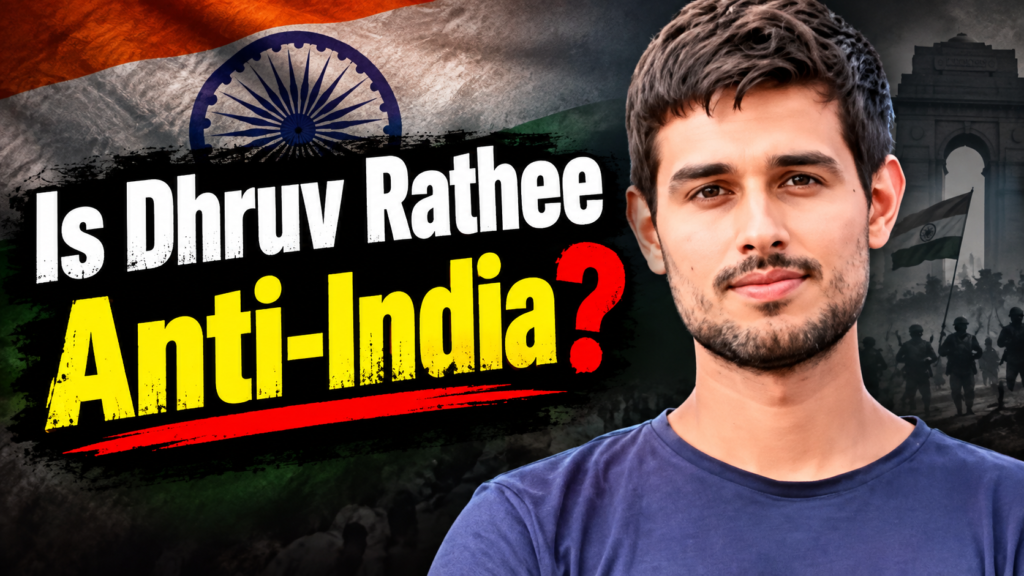
Is Dhruv Rathee Anti-India?

Is Dhruv Rathee Anti-India?

New Delhi | October 11, 2026: Political commentator Dhruv Rathee has become the focus of renewed public debate following reports of his detention in connection with a proposed protest in Delhi and his subsequent release. The reported incident has triggered discussions about political activism, freedom of expression and the growing influence of digital creators in India’s political landscape.

The controversy has also revived criticism of Rathee’s political commentary, particularly his videos examining the policies of the Narendra Modi government and the functioning of public institutions.

Why Was Dhruv Rathee Reportedly Detained?

The central question surrounding the reported incident is the reason behind the detention and the circumstances that led to Rathee’s release.

The situation has drawn attention to the relationship between police restrictions on public gatherings and citizens’ rights to participate in peaceful demonstrations. Establishing the precise grounds for the reported detention requires confirmation of the relevant police statements, orders and legal records.

Detention alone does not establish that a person has committed an offence. The legal circumstances must be examined independently of the political controversy surrounding the individual.

ADVERTISEMENT

Dhruv Rathee’s Political Videos Under Public Scrutiny

Rathee has built a substantial digital audience through videos discussing Indian politics, public policy and government decisions. His content has attracted both support and criticism, reflecting the sharp ideological divisions within India’s online political debate.

Supporters regard his videos as a way to question those in power, while critics challenge his political positions and interpretations of national issues.

The controversy raises an important question about accountability in digital media: are political claims being presented with sufficient evidence, context and transparency?

Individual statements can be evaluated by comparing them with original documents, verifiable data and other relevant evidence. Allegations of misinformation should be assessed claim by claim rather than assumed to be true because of a creator’s political position.

Is Dhruv Rathee Anti-India? The Political Debate

The label “anti-India” is frequently used in heated political arguments, but criticism of a government does not automatically establish opposition to the country.

Rathee’s critics may disagree with his conclusions or question his presentation of particular issues. However, any allegation that he deliberately spreads false information or acts against India’s interests requires specific evidence.

A fair assessment must distinguish political opinion from demonstrably false factual claims and legally established wrongdoing. The same standard should apply to commentators across the political spectrum.

Freedom of Expression and Accountability

The reported detention has brought renewed attention to the balance between public order and freedom of expression. India’s Constitution protects freedom of speech and peaceful assembly, subject to legally permitted restrictions.

Authorities must act within the applicable law, while public figures must remain accountable for factual claims they publish. Neither political popularity nor political unpopularity should replace evidence and due process.

What Happens Next?

Further clarity about the reported incident depends on verified information concerning the grounds for detention, any formal legal proceedings and the official explanation for the release.

For now, the episode highlights the increasingly prominent role of online personalities in political debate and the importance of evaluating controversial claims carefully.

The key question is not simply whether Dhruv Rathee supports or opposes a particular political party, but whether the claims made by all sides can withstand scrutiny based on evidence.

Scroll to Top