World News

Elections Fact Check National Politics Politics World News

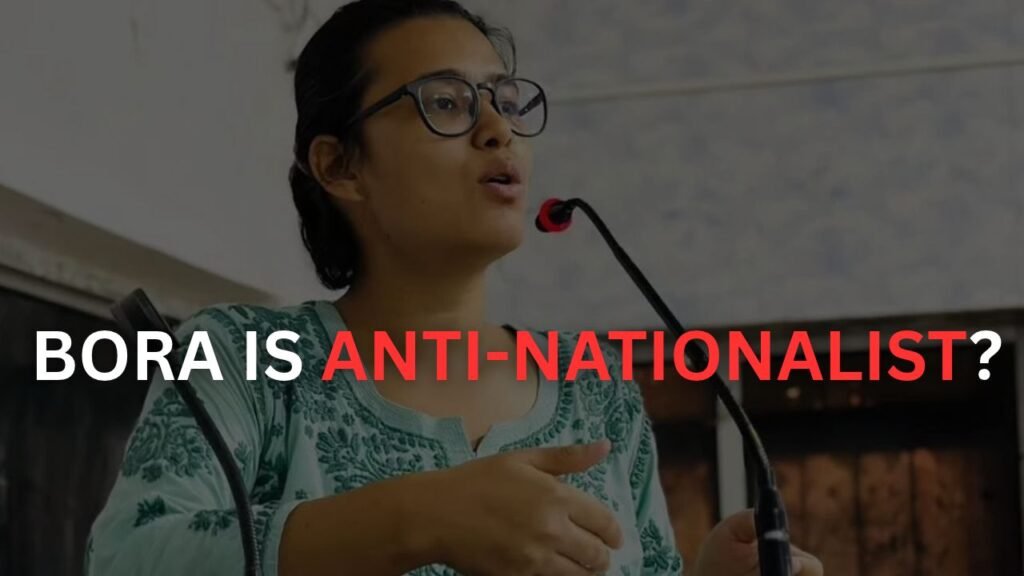
Neha Bora’s Bangladesh Remarks Ignite Nationalism Debate: Political Solidarity or a Call for Regime Change?

AISA president’s praise for Bangladesh’s Gen-Z uprising draws sharp BJP criticism, raising questions about protest politics, democratic accountability and the limits of political solidarity.

NEW DELHI, October 18, 2026: Student activist Neha Bora has become the centre of a political controversy after praising Bangladesh’s 2024 youth-led uprising and describing it as an inspiration for young protesters in India. Her remarks have triggered a sharp response from the Bharatiya Janata Party (BJP), which has questioned the political message behind her statement and accused opposition-linked activists of seeking a Bangladesh-style change of government.

Bora, national president of the All India Students’ Association (AISA), made the comments in a video message to Bangladesh’s Socialist Students’ Front on October 14. She expressed solidarity with Bangladeshi students and said the movement had helped inspire young people in India campaigning for democratic and voting rights.

The controversy has since expanded beyond one video, becoming part of a wider political argument about nationalism, protest movements and the difference between opposing a government and opposing the country itself.

What Did Neha Bora Say About Bangladesh?

Bora praised Bangladesh’s youth movement, using the phrase “showing us the way” while addressing student activists. She drew a parallel between the protests in Bangladesh and demonstrations in India concerning electoral-roll revisions and the role of the Election Commission.

Her message focused on democratic rights, youth participation and opposition to religious fundamentalism. The remarks were politically significant because Bangladesh’s 2024 student-led uprising escalated into a wider confrontation that ultimately led to the departure of then-prime minister Sheikh Hasina.

The Indian political debate is therefore centred on what lessons should be drawn from that episode. Supporters of Bora’s position may interpret her comments as an expression of solidarity between student movements. Critics may argue that invoking a foreign uprising risks encouraging confrontational politics in India.

Those interpretations should be examined separately from the actual words she used. Praising a protest movement does not, by itself, establish that someone supports every action committed during it or wants to reproduce every aspect of another country’s political crisis.

Why Has the BJP Criticised Her?

The BJP has portrayed Bora’s remarks as evidence of a broader opposition agenda aimed at changing the government through street mobilisation. Party spokesperson Pradeep Bhandari argued that her comments, alongside statements by lawyer Prashant Bhushan supporting regime change, reflected a more confrontational political objective.

The controversy intensified after Bhushan made remarks supporting a change of government at a joint press conference attended by Bora and Cockroach Janta Party leader Abhijeet Dipke, according to The New Indian Express. The BJP also attempted to connect the episode to Congress leader Rahul Gandhi and opposition protests against the Election Commission.

These are political allegations made by the BJP, not findings that establish a conspiracy. The distinction matters because criticism of a political statement is legitimate, but claims about hidden coordination or an organised plan require evidence.

Bora’s comments can reasonably be scrutinised for their political meaning and implications without automatically accepting the strongest accusations made against her.

Does Supporting a Foreign Protest Make Someone Anti-National?

The term “anti-national” carries a powerful political charge, but it should not be treated as a factual conclusion based solely on a person’s political views.

In a democracy, citizens may support protests abroad, criticise their own government or advocate a change in political leadership. Such positions are not, on their own, proof of disloyalty to the country. A different question arises if credible evidence establishes support for violence, unlawful foreign interference or activities intended to undermine national security.

In Bora’s case, the public controversy centres on her praise for Bangladesh’s student movement and her participation in Indian protests. The reporting cited here does not establish that she is working for a foreign government or participating in a foreign-directed operation.

It is therefore more accurate to ask whether her political comparisons are appropriate, whether her demands are supported by evidence and whether the methods advocated by the movement respect democratic and legal processes.

Those questions allow for serious criticism without turning an accusation into an unsupported fact.

The Background: Protests Against Electoral-Roll Revision

Bora’s remarks came amid demonstrations against the Special Intensive Revision (SIR) of electoral rolls and demands for accountability from Chief Election Commissioner Gyanesh Kumar.

The protest movement alleges that the revision has resulted in the removal of large numbers of names and raises concerns about eligible voters being excluded. The Election Commission has rejected allegations of political bias and has said that voters whose names were wrongly removed can seek re-enrolment. Reuters reported that the revision involved substantial removals for reasons including deaths, relocation and individuals who could not be traced.

This dispute is central to understanding Bora’s position. Her supporters argue that challenging electoral procedures is a legitimate democratic activity. Critics question the protest movement’s political framing and the claims it makes about the intentions of election authorities.

The factual issues require close examination of official records, the reasons for deletions, correction mechanisms and evidence that any eligible voters were improperly excluded. Allegations of deliberate manipulation should not be treated as proven without substantiation.

Pakistan Links: What Evidence Exists?

The Bangladesh controversy has also prompted wider online speculation about foreign connections. However, a statement expressing solidarity with Bangladeshi students is not proof of links to Pakistan or any foreign intelligence service.

The reports cited in this article do not establish that Bora receives funding from Pakistan, works with Pakistani authorities or participates in a foreign-backed conspiracy. Such allegations would require specific, verifiable evidence, such as documented financial transactions, authenticated communications or credible investigative findings.

Indeed, Bora has previously criticised the practice of labelling student protesters as “Pakistani agents,” arguing that such accusations are used to discredit dissent, according to an interview published by Geo News in July 2026.

That statement reflects her position on political criticism; it neither proves nor disproves any separate allegation of foreign connections. Those claims must be assessed on their own evidence.

Nationalism, Dissent and Political Accountability

The controversy highlights a larger question facing Indian politics: how should public figures be judged when they praise movements in other countries while campaigning against their own government?

Nationalism can mean different things to different people. For some, it emphasises national security, sovereignty and stability. For others, it includes protecting constitutional rights, questioning public institutions and demanding accountability from those in power.

These ideas can conflict during moments of political tension. But disagreement about the government does not automatically amount to hostility towards the country, just as invoking democratic rights does not exempt a protest movement from scrutiny.

Bora’s statements deserve examination for what they actually communicate. Critics can question whether Bangladesh is an appropriate model for Indian political mobilisation, particularly given the violence and instability associated with that country’s 2024 uprising. Supporters can argue that her reference concerned youth participation and democratic demands rather than copying the entire course of events.

The public should assess these competing interpretations using the full context of her remarks, the movement’s stated objectives and any evidence of unlawful conduct.

Conclusion: A Controversy That Demands Evidence

Neha Bora’s praise for Bangladesh’s Gen-Z uprising has created a significant political controversy, with the BJP interpreting her remarks as part of a wider campaign for regime change. The episode has intensified debate over student activism, opposition politics and the meaning of nationalism in India.

Her remarks can be criticised, challenged and debated. The BJP’s allegations can also be reported and examined. But neither political support for a foreign protest movement nor criticism of the Indian government is sufficient, by itself, to establish that a person is anti-national.

The more consequential questions concern evidence, political intent and conduct: what Bora actually advocated, whether the protest movement’s electoral allegations are substantiated, and whether its activities remain within democratic and legal boundaries.

A serious examination of the controversy should hold public figures accountable for their words while avoiding unsupported claims about foreign connections or disloyalty. In a democratic society, scrutiny is strongest when it relies on verifiable facts rather than labels.

City & Local Politics World News

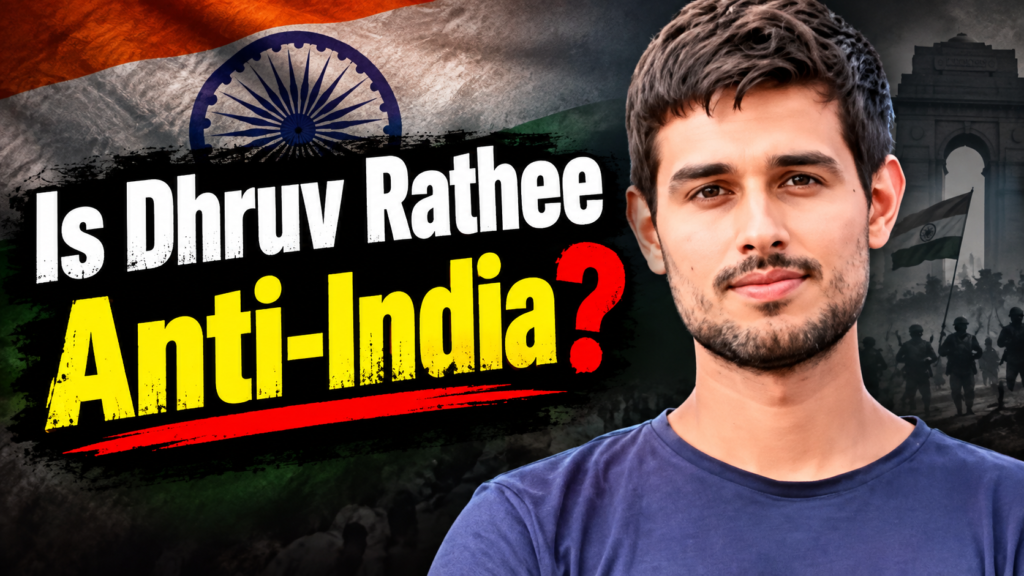
Is Dhruv Rathee Anti-India?

Is Dhruv Rathee Anti-India?

New Delhi | October 11, 2026: Political commentator Dhruv Rathee has become the focus of renewed public debate following reports of his detention in connection with a proposed protest in Delhi and his subsequent release. The reported incident has triggered discussions about political activism, freedom of expression and the growing influence of digital creators in India’s political landscape.

The controversy has also revived criticism of Rathee’s political commentary, particularly his videos examining the policies of the Narendra Modi government and the functioning of public institutions.

Why Was Dhruv Rathee Reportedly Detained?

The central question surrounding the reported incident is the reason behind the detention and the circumstances that led to Rathee’s release.

The situation has drawn attention to the relationship between police restrictions on public gatherings and citizens’ rights to participate in peaceful demonstrations. Establishing the precise grounds for the reported detention requires confirmation of the relevant police statements, orders and legal records.

Detention alone does not establish that a person has committed an offence. The legal circumstances must be examined independently of the political controversy surrounding the individual.

ADVERTISEMENT

Dhruv Rathee’s Political Videos Under Public Scrutiny

Rathee has built a substantial digital audience through videos discussing Indian politics, public policy and government decisions. His content has attracted both support and criticism, reflecting the sharp ideological divisions within India’s online political debate.

Supporters regard his videos as a way to question those in power, while critics challenge his political positions and interpretations of national issues.

The controversy raises an important question about accountability in digital media: are political claims being presented with sufficient evidence, context and transparency?

Individual statements can be evaluated by comparing them with original documents, verifiable data and other relevant evidence. Allegations of misinformation should be assessed claim by claim rather than assumed to be true because of a creator’s political position.

Is Dhruv Rathee Anti-India? The Political Debate

The label “anti-India” is frequently used in heated political arguments, but criticism of a government does not automatically establish opposition to the country.

Rathee’s critics may disagree with his conclusions or question his presentation of particular issues. However, any allegation that he deliberately spreads false information or acts against India’s interests requires specific evidence.

A fair assessment must distinguish political opinion from demonstrably false factual claims and legally established wrongdoing. The same standard should apply to commentators across the political spectrum.

Freedom of Expression and Accountability

The reported detention has brought renewed attention to the balance between public order and freedom of expression. India’s Constitution protects freedom of speech and peaceful assembly, subject to legally permitted restrictions.

Authorities must act within the applicable law, while public figures must remain accountable for factual claims they publish. Neither political popularity nor political unpopularity should replace evidence and due process.

What Happens Next?

Further clarity about the reported incident depends on verified information concerning the grounds for detention, any formal legal proceedings and the official explanation for the release.

For now, the episode highlights the increasingly prominent role of online personalities in political debate and the importance of evaluating controversial claims carefully.

The key question is not simply whether Dhruv Rathee supports or opposes a particular political party, but whether the claims made by all sides can withstand scrutiny based on evidence.

City News Deals Education Retail Shopping Startups & MSMEs World News

Health Benefits of Dry Fruits: Why Almonds, Cashews, Raisins and Walnuts Deserve a Place in Your Diet

Health Benefits of Dry Fruits: Why Almonds, Cashews, Raisins and Walnuts Deserve a Place in Your Diet

Delhi, India: Dry fruits have long been a part of Indian households, often served to guests, added to sweets and consumed during festivals. But beyond their traditional importance, nuts and dried fruits can also contribute valuable nutrients to a balanced diet.

Almonds, cashews, raisins and walnuts contain combinations of healthy fats, protein, fibre, vitamins, minerals and naturally occurring plant compounds. When consumed in appropriate portions, they can be a convenient addition to everyday meals and snacks.

As consumers become increasingly conscious about food quality and nutrition, premium dry fruits are also finding a growing place in modern kitchens. Brands such as Mewa Darbar are bringing commonly consumed dry fruits into convenient packaged formats, making it easier for consumers to keep products such as almonds, cashews, raisins and other premium varieties at home.

However, dry fruits are nutrient-dense foods, which means portion size remains important.

1. Almonds May Support Heart Health

Almonds are among the most popular nuts consumed in India. They provide protein, fibre, magnesium and predominantly unsaturated fats.

Including almonds as part of a balanced eating pattern may support cardiovascular health, particularly when they replace foods higher in saturated fats.

Almonds are also convenient as a snack. A small portion can be added to breakfast, yoghurt, oatmeal or smoothies.

For people who prefer simple foods with minimal preparation, keeping a pack of quality almonds at home can make healthy snacking more convenient.

2. Walnuts Provide Plant-Based Omega-3 Fats

Walnuts are particularly notable because they contain alpha-linolenic acid (ALA), a plant-based omega-3 fatty acid.

Omega-3 fats are associated with several aspects of cardiovascular health. Walnuts also provide protein, fibre and other nutrients.

Their slightly rich and earthy flavour makes them suitable for both direct consumption and recipes. They can be chopped into salads, breakfast bowls or desserts.

For consumers looking to diversify their nut intake, adding walnuts alongside almonds and other nuts can provide a broader range of nutrients.

3. Cashews Provide Energy and Minerals

Cashews are widely used in Indian cooking, sweets and snacks. They contain healthy unsaturated fats along with protein and minerals such as copper and magnesium.

Copper plays a role in energy production, connective tissue formation and normal functioning of the nervous and immune systems.

Because cashews are calorie-dense, however, eating them in moderate portions is generally more appropriate than consuming large quantities at once.

Premium-grade cashews can also be used in home cooking, including gravies, desserts and traditional festive preparations.

4. Raisins Offer Natural Sweetness

Raisins are dried grapes and contain naturally occurring sugars, making them a naturally sweet snack.

They also provide dietary fibre and minerals such as potassium and iron, although the exact nutritional contribution depends on the quantity consumed.

Raisins can be added to breakfast cereals, porridge, desserts or trail mixes. They can also provide sweetness to recipes without requiring additional refined sugar.

Since raisins are concentrated compared with fresh grapes, portion awareness is particularly useful.

5. Dry Fruits Can Make Snacking More Convenient

One of the biggest advantages of nuts and dried fruits is convenience.

Unlike many fresh foods, properly packaged dry fruits can generally be stored for longer periods and consumed without extensive preparation. This makes them practical for office workers, students, travellers and families.

A small combination of almonds, walnuts, cashews and raisins can also create a simple homemade trail mix.

The key is to focus on quality and portion size rather than treating dry fruits as unlimited snacks.

6. They Can Add Nutritional Variety to the Diet

Different dry fruits offer different nutritional profiles.

Almonds can contribute vitamin E, magnesium, fibre and protein. Walnuts provide ALA omega-3 fatty acids. Cashews contribute minerals and healthy fats, while raisins provide carbohydrates and naturally occurring sugars.

Combining different varieties can therefore add nutritional diversity to meals and snacks.

This is one reason many Indian households traditionally keep multiple varieties of dry fruits rather than relying on only one type.

Choosing Better-Quality Dry Fruits

Not all packaged dry fruits are necessarily the same. Consumers should pay attention to the ingredient list, packaging, freshness, storage conditions and whether additional sugar, salt, flavours or oils have been added.

For everyday consumption, many people prefer products that clearly communicate the variety, weight and ingredients on the package.

This is also where the premium dry-fruit segment is evolving. Brands such as Mewa Darbar are positioning products around carefully selected dry fruits and convenient consumer packaging, reflecting the broader shift towards quality-focused food products.

The important point for consumers is not simply the brand name but the quality, freshness and suitability of the product for their dietary needs.

How Much Dry Fruit Should You Eat?

Dry fruits are nutrient-dense, so more is not necessarily better.

A small handful of nuts can provide substantial calories. Individuals trying to manage their calorie intake should therefore pay attention to portion sizes.

People with specific dietary restrictions, allergies, diabetes or other medical conditions should also consider their individual nutritional requirements and seek professional dietary advice where necessary.

Another useful approach is to incorporate dry fruits into meals rather than treating them as an unlimited snack. A few almonds with breakfast, walnuts in a salad or a small quantity of raisins in porridge can be simple ways to include them in the diet.

The Traditional Food Getting a Modern Makeover

Dry fruits have always had a strong connection with Indian food culture. From Diwali gift boxes to wedding celebrations and traditional desserts, nuts and dried fruits have been associated with hospitality and special occasions.

Today, that tradition is increasingly being combined with modern packaging, e-commerce and direct-to-consumer food brands.

Consumers can now order products online and have them delivered directly to their homes, while brands are focusing more closely on packaging, product presentation, sourcing and convenience.

Mewa Darbar is part of this emerging premium dry-fruit category, offering products designed around everyday consumption as well as gifting and festive occasions.

For consumers, the bigger trend is clear: dry fruits are moving beyond the festival box and becoming a regular part of modern Indian snacking habits.

The Bottom Line

Dry fruits can be a nutritious addition to a balanced diet when consumed in sensible portions. Almonds, walnuts, cashews and raisins each offer different nutrients and can be incorporated into breakfast, snacks, salads and traditional recipes.

However, they should complement an overall balanced diet rather than be considered a replacement for fresh fruits, vegetables, whole grains or other essential food groups.

Whether purchased from a local dry-fruit store or a modern brand such as Mewa Darbar, consumers should look for freshness, good packaging, transparent labelling and products that match their dietary preferences.

With the right portions and a varied diet, a small serving of dry fruits can be a simple way to add nutrition, taste and convenience to everyday eating.

Health Disclaimer

This article is intended for general educational and informational purposes and does not constitute medical or dietary advice. Nutritional needs vary from person to person. Individuals with allergies, medical conditions or specific dietary requirements should consult a qualified healthcare or nutrition professional.

World News

Netanyahu Invites Smit Machchhar to Israel, Praises Indian Pilot After Flydubai Crisis

Netanyahu Invites Smit Machchhar to Israel, Praises Indian Pilot After Flydubai Crisis

Israeli Prime Minister Benjamin Netanyahu has spoken directly with Indian Flydubai captain Smit Machchhar, praising his courage during a serious in-flight emergency and extending an invitation for him and Prime Minister Narendra Modi to participate in Israel’s Independence Day celebrations.

The conversation has brought international attention to Machchhar, who is recovering after being injured during a cockpit attack on a Dubai-to-Tel Aviv flight.

Netanyahu’s Special Invitation to Machchhar

During the conversation, Netanyahu praised Machchhar for remaining determined during an extremely difficult situation. He also invited the Indian captain and Prime Minister Modi to take part in Israel’s traditional Independence Day flame-lighting ceremony.

The invitation carries symbolic importance because the ceremony is closely connected with Israel’s national celebrations and honours people recognised for their contribution to society.

For Machchhar, the invitation comes only days after he faced a life-threatening situation inside the cockpit of a commercial aircraft.

The Flight That Turned Into an Emergency

Machchhar was operating Flydubai Flight FZ1073 on its journey from Dubai to Tel Aviv when the situation inside the cockpit suddenly changed.

According to Machchhar’s account, his co-pilot had asked for time to pray. The captain respected the request and continued concentrating on the flight.

A short time later, Machchhar was unexpectedly attacked.

The incident left him seriously injured and created an immediate threat to the aircraft and everyone travelling on board.

Despite his condition, Machchhar understood that he needed to get the cockpit door open.

The Moment That Changed the Situation

Machchhar later explained that the first attack initially made him think something had gone badly wrong with the aircraft itself.

As the attack continued, he realised that the danger was coming from inside the cockpit.

His vision was affected and he was struggling physically, but he continued trying to reach the cockpit door.

Opening that door became a crucial moment.

Once people outside were able to enter the cockpit, they could intervene and help bring the situation under control. Other qualified pilots were also able to assist with the aircraft.

The flight ultimately landed safely in Saudi Arabia.

Netanyahu Praises Machchhar’s Courage

Speaking to the injured pilot, Netanyahu expressed admiration for the way Machchhar reacted under extreme pressure.

The Israeli leader told him that his actions had helped protect the people aboard the aircraft and described him as a hero for India, Israel and the wider world.

The conversation was more than a formal exchange between two public figures. Machchhar also personally described what happened during the incident, giving Netanyahu an account of the frightening moments inside the cockpit.

Why the Invitation Matters

Netanyahu’s invitation has added a new international dimension to Machchhar’s story.

Israel’s Independence Day celebrations include a prominent flame-lighting ceremony in which selected individuals are honoured for their contribution and service.

The proposal for Machchhar to participate would be an unusual recognition for an Indian commercial pilot.

It also highlights the growing public attention around his actions during the Flydubai emergency.

However, the invitation should be described as an invitation at this stage. The formal selection process for the ceremony is separate, so his final participation should not be presented as confirmed until officially announced.

PM Modi Also Connected With Machchhar

Before Netanyahu’s conversation, Prime Minister Narendra Modi had spoken with Machchhar during his recovery.

The Indian government has also publicly recognised the pilot’s actions during the emergency.

Machchhar’s story has therefore moved beyond aviation news. It has become an international story involving India, Israel, the UAE and Saudi Arabia.

For the pilot himself, however, the immediate priority remains recovery from his injuries.

A Pilot’s Fight to Protect the Aircraft

What makes Machchhar’s story particularly striking is that his decisions came while he was himself under attack.

A pilot is trained to manage technical failures, weather problems and other aviation emergencies. A violent confrontation inside the cockpit creates a completely different challenge.

Machchhar had to deal with his own injuries while simultaneously thinking about the aircraft and the people on board.

His attempt to open the cockpit door created an opportunity for others to help.

That decision ultimately became one of the defining moments of the incident.

Investigation Still Underway

The incident is also raising wider questions about aviation security.

Investigators will have to establish exactly how the confrontation began, what led to the attack and whether there were warning signs that could have been identified earlier.

The case could also lead to renewed discussion about pilot screening, cockpit security, background checks and communication between aviation authorities in different countries.

Those questions will need to be addressed through the official investigation rather than speculation.

From an Emergency Flight to an International Honour

Smit Machchhar’s journey from a routine commercial flight to an international recognition story has happened within just a few days.

He began the flight as a captain responsible for safely transporting passengers between Dubai and Tel Aviv.

The flight then became an emergency, leaving Machchhar injured and forcing him to make critical decisions under enormous pressure.

Now, after speaking with both Indian and Israeli leadership, he has received an invitation connected with one of Israel’s most significant national celebrations.

Whether Machchhar ultimately appears at the Independence Day ceremony will depend on the formal process ahead.

But the significance of the invitation is already clear: his actions during the Flydubai emergency have attracted attention far beyond the aviation industry.

For now, the focus remains on his recovery and the continuing investigation into what happened inside the aircraft.

World News

Smit Machchhar Flydubai Case: How an Indian Pilot Helped Prevent a Mid-Air Disaster

Smit Machchhar FlyDubai Case: Full Story & Analysis

What began as a routine flight from Dubai to Tel Aviv turned into one of the most frightening aviation incidents of recent times. At the centre of the crisis was Indian pilot Captain Smit Machchhar, who was reportedly attacked inside the cockpit by his co-pilot while flying Flydubai Flight FZ1073.

The incident on September 30, 2026, sent the Boeing 737 MAX 8 into a dramatic descent before the aircraft was eventually diverted to Tabuk, Saudi Arabia. Machchhar, despite suffering serious injuries, managed to open the cockpit door, allowing passengers and crew members to intervene. The aircraft ultimately landed safely.

Here is a detailed look at what happened, what is known about the case and why it has raised major questions about aviation security.

The Flight That Suddenly Turned Into a Crisis

Flydubai Flight FZ1073 departed Dubai International Airport for Tel Aviv on September 30. Flight data showed the aircraft climbing to around 34,000 feet before a sudden and extremely steep descent occurred.

According to Reuters, the aircraft lost more than 16,000 feet in just over 30 seconds during the most dramatic part of the incident. The aircraft subsequently stabilised, transmitted an emergency signal and was diverted towards Saudi Arabia.

Passengers onboard had little idea initially about what was happening inside the cockpit.

The emergency was not caused by an ordinary mechanical problem, according to subsequent investigations. Authorities said the crisis began with an attack inside the flight deck.

What Happened to Captain Smit Machchhar?

Captain Smit Machchhar was flying the aircraft when his co-pilot allegedly attacked him inside the cockpit.

The latest account from Machchhar provides a disturbing picture of those moments. Speaking about the incident, he described being struck from behind and initially struggling to understand what was happening. In a later conversation with Israeli Prime Minister Benjamin Netanyahu, Machchhar said the initial blows affected his vision and that he realised the aircraft was descending while he was injured.

The situation became a fight for both his life and the safety of everyone aboard.

Despite his injuries, Machchhar managed to reach the cockpit door and open it. Reports say the door was opened more than once during the struggle, eventually creating an opportunity for people outside the cockpit to intervene.

That decision proved crucial.

Passengers Became Part of the Rescue

Once the cockpit door was accessible, passengers and crew members moved towards the flight deck and helped restrain the attacker.

Among those onboard were off-duty pilots who later helped take control of the aircraft. A passenger also assisted in stabilising the aircraft during the emergency before the experienced pilots could fully take over.

The aircraft was subsequently diverted and landed safely at Tabuk Airport in Saudi Arabia.

The response was therefore not the work of one person alone. Machchhar’s actions created the opportunity for intervention, while passengers, crew and off-duty pilots helped prevent the situation from becoming a catastrophe.

Why Did the Co-Pilot Attack?

This is one of the most important questions in the entire case.

The United Arab Emirates has now described the incident as an attempted terrorist act. UAE Attorney-General Hamad Saif Al Shamsi said investigators found that the co-pilot attacked the captain with a crash axe and attempted to take control of the aircraft. However, authorities have also said that the investigation is continuing to establish the complete circumstances, motives and any possible links.

That distinction is important.

There has been considerable speculation about the co-pilot’s background and possible motives. Some political leaders have discussed alleged radicalisation, while other reports have raised questions about his previous employment and aviation history.

But the investigation is still examining the evidence.

The UAE Ministry of Foreign Affairs has specifically warned against relying on speculation or unverified information until the investigation is completed.

Therefore, claims about the attacker’s exact ideology, outside connections or wider planning should not be treated as established facts unless confirmed by investigators.

Questions Over Pilot Screening

The incident has opened a much bigger conversation about aviation security and pilot screening.

Commercial pilots undergo extensive training and are subject to professional and background checks. The fact that the alleged attacker was himself a qualified commercial pilot raises an uncomfortable question: how can a person entrusted with hundreds of lives become an internal threat?

Reports have also raised questions about the co-pilot’s previous aviation career and whether concerns had been raised about him before he joined Flydubai. These matters are now part of the wider scrutiny surrounding the case.

The investigation could therefore have consequences beyond this single flight.

Airlines and aviation authorities may examine psychological assessments, background checks, information-sharing between countries and procedures for dealing with unusual behaviour among cockpit crew.

Who Is Smit Machchhar?

The incident has also brought international attention to Captain Smit Machchhar.

Machchhar is an Indian commercial pilot who previously worked with SpiceJet before joining Flydubai in 2022. Reports describe him as an experienced Boeing 737 pilot with thousands of hours of flying experience.

His professional experience became critical during the crisis.

For a pilot, emergencies demand quick decisions, discipline and the ability to remain focused under extreme pressure. In this case, Machchhar was dealing with both a personal attack and an aircraft emergency simultaneously.

His decision to open the cockpit door despite his injuries became one of the defining moments of the incident.

Why the Case Matters for Global Aviation

The Flydubai incident is unusual because the threat reportedly came from inside the cockpit rather than from an external attacker.

Modern aviation security has spent decades concentrating on keeping unauthorised people out of cockpits. The incident raises a different question: what happens when the threat is already inside?

It could lead to renewed discussions about cockpit access, pilot monitoring, crew mental-health assessments, emergency procedures and information sharing between aviation authorities.

Israel has also indicated that pilot screening and security procedures could be reviewed following the incident.

Captain Machchhar’s Recovery

After the aircraft landed in Saudi Arabia, Machchhar received medical treatment and was later transferred to the UAE. India’s diplomatic representatives visited him during his recovery, with reports describing his condition as stable and improving.

His actions have received praise from Indian Prime Minister Narendra Modi and Israeli Prime Minister Benjamin Netanyahu. The Federation of Indian Pilots has also called for recognition of his actions.

The attention, however, has not changed the central fact of the case: a serious investigation is still underway.

The Bigger Picture

The Smit Machchhar Flydubai case is not simply a story about a pilot being attacked.

It is a story about how quickly an ordinary commercial flight can turn into an emergency, how professional training can matter in moments of extreme danger, and how passengers and crew can collectively make a difference.

Machchhar’s role has rightly attracted international attention, but the incident also highlights the importance of everyone involved — from cabin crew and passengers to off-duty pilots and emergency responders.

The biggest unanswered questions now concern why the attack happened, whether it was planned, whether anyone else was involved and how the alleged attacker passed existing security and professional screening procedures.

The UAE investigation is continuing, including examination of physical and digital evidence. Authorities have said the final findings will be released after the necessary procedures are completed.

Until then, the clearest conclusion is also the simplest one: Flight FZ1073 came dangerously close to disaster, but quick decisions inside and outside the cockpit helped bring the aircraft and its passengers to safety.

For Captain Smit Machchhar, what began as another flight became a life-threatening fight. His actions during those critical minutes have made him the central figure in a case that could influence aviation security discussions far beyond this single flight.

Scroll to Top