
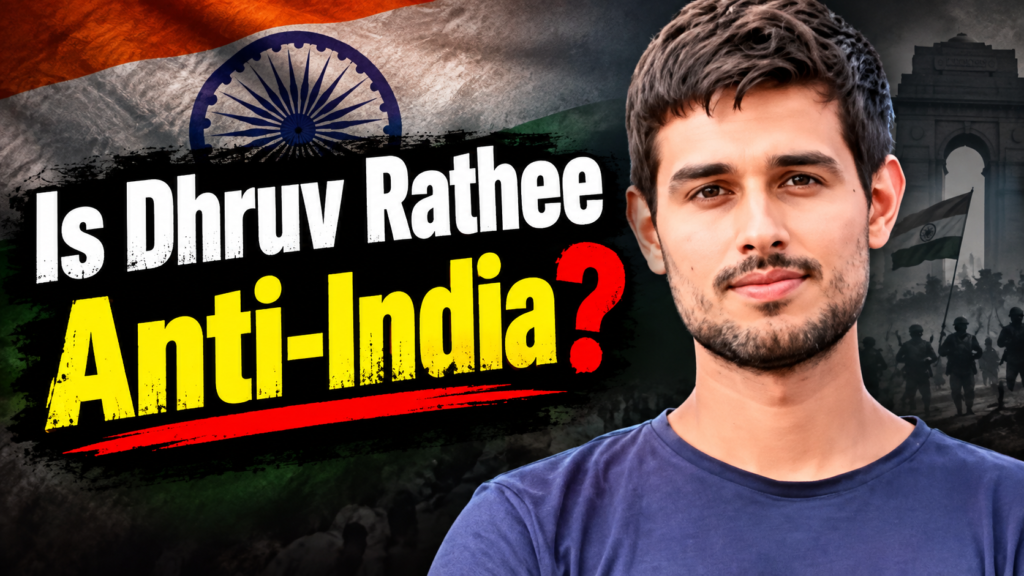
Is Dhruv Rathee Anti-India?
New Delhi | October 11, 2026: Political commentator Dhruv Rathee has become the focus of renewed public debate following reports of his detention in connection with a proposed protest in Delhi and his subsequent release. The reported incident has triggered discussions about political activism, freedom of expression and the growing influence of digital creators in India’s political landscape.
The controversy has also revived criticism of Rathee’s political commentary, particularly his videos examining the policies of the Narendra Modi government and the functioning of public institutions.
Why Was Dhruv Rathee Reportedly Detained?
The central question surrounding the reported incident is the reason behind the detention and the circumstances that led to Rathee’s release.
The situation has drawn attention to the relationship between police restrictions on public gatherings and citizens’ rights to participate in peaceful demonstrations. Establishing the precise grounds for the reported detention requires confirmation of the relevant police statements, orders and legal records.
Detention alone does not establish that a person has committed an offence. The legal circumstances must be examined independently of the political controversy surrounding the individual.

Dhruv Rathee’s Political Videos Under Public Scrutiny
Rathee has built a substantial digital audience through videos discussing Indian politics, public policy and government decisions. His content has attracted both support and criticism, reflecting the sharp ideological divisions within India’s online political debate.
Supporters regard his videos as a way to question those in power, while critics challenge his political positions and interpretations of national issues.
The controversy raises an important question about accountability in digital media: are political claims being presented with sufficient evidence, context and transparency?
Individual statements can be evaluated by comparing them with original documents, verifiable data and other relevant evidence. Allegations of misinformation should be assessed claim by claim rather than assumed to be true because of a creator’s political position.
Is Dhruv Rathee Anti-India? The Political Debate
The label “anti-India” is frequently used in heated political arguments, but criticism of a government does not automatically establish opposition to the country.
Rathee’s critics may disagree with his conclusions or question his presentation of particular issues. However, any allegation that he deliberately spreads false information or acts against India’s interests requires specific evidence.
A fair assessment must distinguish political opinion from demonstrably false factual claims and legally established wrongdoing. The same standard should apply to commentators across the political spectrum.
Freedom of Expression and Accountability
The reported detention has brought renewed attention to the balance between public order and freedom of expression. India’s Constitution protects freedom of speech and peaceful assembly, subject to legally permitted restrictions.
Authorities must act within the applicable law, while public figures must remain accountable for factual claims they publish. Neither political popularity nor political unpopularity should replace evidence and due process.
What Happens Next?
Further clarity about the reported incident depends on verified information concerning the grounds for detention, any formal legal proceedings and the official explanation for the release.
For now, the episode highlights the increasingly prominent role of online personalities in political debate and the importance of evaluating controversial claims carefully.
The key question is not simply whether Dhruv Rathee supports or opposes a particular political party, but whether the claims made by all sides can withstand scrutiny based on evidence.