Political Leaders

Fact Check National Politics Political Leaders Political Parties Politics

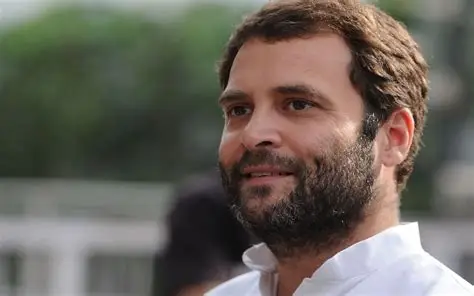
Rahul Gandhi Abroad Amid Opposition Protests: Will the Protest Resume? Questions Raised Over Soros Funding Claims

NEW DELHI — Congress leader and Leader of the Opposition Rahul Gandhi’s reported visit to Vietnam has sparked a political debate over the opposition’s protest strategy, its next course of action, and allegations raised by BJP leaders concerning foreign organisations.

According to a report published by Jansatta on October 20, 2026, Gandhi left for a four-day visit to Vietnam amid opposition demonstrations against Chief Election Commissioner Gyanesh Kumar. The report also said the protests had been temporarily paused during the festive period.

RAHUL GANDHI

His reported absence has prompted questions about when the opposition will resume its demonstrations and how the INDIA bloc intends to pursue its demands.

However, travelling abroad does not establish that a political leader is absconding. No evidence in the reports reviewed establishes that Rahul Gandhi is evading law enforcement or has fled from a criminal investigation.

Why Were the Opposition Parties Protesting?

The recent demonstrations centred on allegations of irregularities in the revision of electoral rolls, known as the Special Intensive Revision (SIR).

On October 6 and 7, opposition lawmakers led by Rahul Gandhi and other INDIA bloc leaders demonstrated in Delhi, demanding accountability from the Election Commission and calling for Chief Election Commissioner Gyanesh Kumar to resign.

Police detained Gandhi and several other opposition lawmakers during the demonstrations. They were subsequently released. Reports also described a protest march on October 12, when opposition leaders attempted to take their concerns towards the Supreme Court.

The opposition has alleged that changes to electoral rolls could unfairly affect eligible voters. The Election Commission and government have disputed allegations of political bias, saying electoral-roll revisions are intended to remove duplicate and ineligible entries while protecting eligible voters.

These competing claims remain central to the political dispute. Any assessment of alleged electoral irregularities must rely on verifiable records, relevant legal proceedings, and evidence from the authorities concerned.

Will Rahul Gandhi Continue or End the Protest?

Gandhi’s reported overseas visit has raised a practical question: will the INDIA bloc resume its demonstrations after the temporary pause?

As of October 22, the reports reviewed do not establish a definitive decision by Gandhi to permanently end the protest. A temporary suspension during a festive period should not automatically be interpreted as abandonment of the campaign.

The opposition could pursue its demands through renewed demonstrations, parliamentary debate, legal proceedings, or meetings with election authorities. Its next steps will depend on announcements from Congress and its alliance partners.

The central issue remains whether the opposition can substantiate its allegations and secure a response to its concerns about electoral-roll revisions.

BJP Leaders Raise Allegations About Foreign Organisations

The political controversy has also expanded to allegations of foreign connections.

On October 22, reports by The Economic Times and The Times of India described BJP leaders Nishikant Dubey and Gaurav Bhatia making allegations concerning Rahul Gandhi, foreign-based organisations, and possible efforts to influence or amplify protests in India.

Some of these allegations referred to George Soros-associated organisations and other international networks. They represent claims made by political opponents, not established findings of foreign funding or direction of the demonstrations.

It is important to distinguish between a politician meeting foreign individuals, an organisation supporting a cause, and a documented financial relationship that funds a particular protest. These are different matters and require different kinds of evidence.

The material reviewed for this article does not establish that George Soros personally funded Rahul Gandhi’s current protests or directed the INDIA bloc’s campaign. Establishing such a claim would require reliable financial documentation, verified organisational records, or findings from a credible investigation.

What Evidence Would Establish a Funding Connection?

Claims involving foreign funding can be investigated through several types of evidence:

  • Verified financial records showing money transferred to an organisation involved in the demonstrations.
  • Official filings identifying donors, recipients, and the stated purpose of funding.
  • Credible investigative findings establishing a connection between funding and specific protest activities.
  • Authenticated communications or organisational documents demonstrating coordination.

An allegation alone does not establish that such evidence exists. Similarly, the existence of an international organisation or a meeting with a foreign political figure does not automatically demonstrate involvement in unlawful activity.

If verifiable evidence emerges, it should be examined on its merits and reported with the relevant context and responses from the people or organisations concerned.

The Political Question: Accountability and Transparency

The debate over Rahul Gandhi’s overseas visit and the opposition’s protests reflects a wider political contest over electoral transparency, institutional accountability, and the role of opposition parties.

Critics may question the timing of a leader’s foreign visit during a period of political mobilisation. Supporters may argue that the campaign can continue through other leaders and institutional channels. Neither interpretation, by itself, proves anything about the alleged foreign funding of the protests.

Ultimately, the public deserves answers based on documented facts rather than speculation. The opposition’s claims about electoral rolls should be assessed through evidence, while allegations of foreign financial involvement should be examined through transparent and credible verification.

Conclusion

Rahul Gandhi’s reported visit to Vietnam has raised questions about the timing and future direction of the INDIA bloc’s protest campaign. Reports indicate that the demonstrations were temporarily paused, but they do not establish that the campaign has permanently ended or that Gandhi is absconding.

Separately, BJP leaders have raised allegations concerning foreign organisations and political protests. The available reporting reviewed for this article does not establish that George Soros funded or directed Rahul Gandhi’s demonstrations.

The key questions remain whether the opposition will announce a new protest schedule, what evidence will emerge concerning electoral-roll allegations, and whether claims of foreign funding can be substantiated through verifiable records.

The distinction is essential: political criticism is legitimate, but allegations of wrongdoing must be supported by evidence.

Political Analysis Political Leaders Politics State Politics

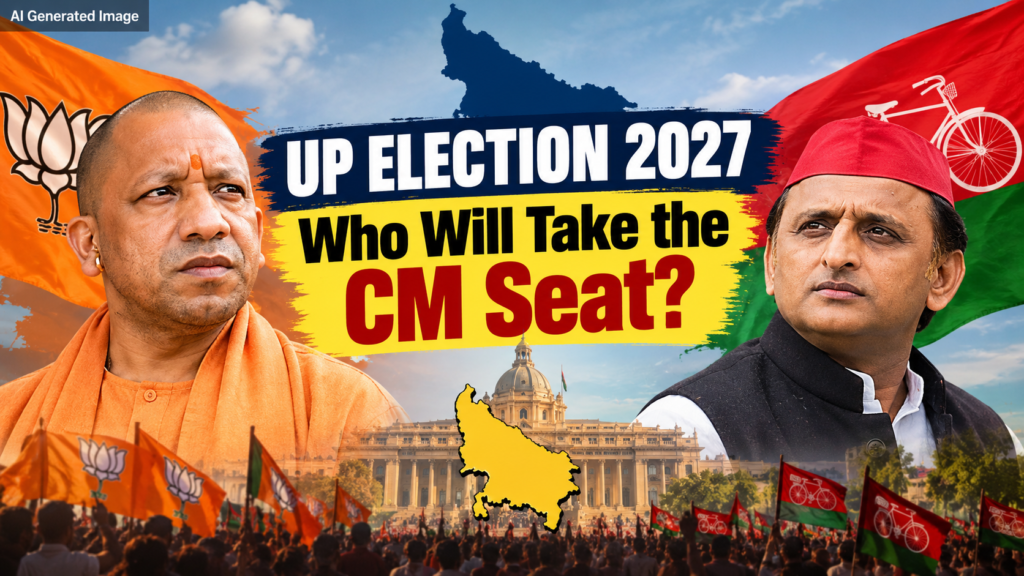
UP Election 2027: Who Will Take the CM Seat?

UP Election 2027: Who Will Take the CM Seat?

The political atmosphere in Uttar Pradesh is gradually changing as parties prepare for the 2027 Assembly elections. From Lucknow to western Uttar Pradesh and the eastern districts, political leaders are strengthening their organisations, reaching out to voters and preparing strategies for the next electoral battle. The biggest question remains: will Yogi Adityanath continue as Chief Minister, or will Akhilesh Yadav lead a new government?

Uttar Pradesh is not just another state in Indian politics. With 403 Assembly constituencies, its election results have a significant influence on national political discussions. A party needs at least 202 seats to secure a simple majority in the state Assembly.

ADVERTISEMENT

BJP’s Challenge: Can Yogi Adityanath Retain Power?

The BJP enters the 2027 election cycle as the incumbent party, with Yogi Adityanath leading the government. The party has an established political organisation, a recognised leadership structure and a governance record that it can present to voters.

For the BJP, the upcoming election will be about maintaining public support while addressing issues that matter to ordinary households. Infrastructure, employment opportunities, public safety, welfare benefits, investment and rural development are likely to feature prominently in its campaign.

However, the party cannot assume that its previous electoral success will automatically translate into another victory. Voter expectations change, local candidates face different challenges, and constituency-level concerns can influence the final outcome.

The BJP’s central challenge will be to convert its organisational strength into sufficient votes across all regions of Uttar Pradesh.

Akhilesh Yadav and the Samajwadi Party’s Opportunity

Akhilesh Yadav and the Samajwadi Party represent the principal opposition challenge to the BJP in Uttar Pradesh. The party will be looking to build on its performance in the 2024 Lok Sabha election and establish a stronger position in the Assembly contest.

One important part of its political approach is expanding its support among backward classes, Dalits, minorities and other voter groups. The party’s PDA strategy is intended to create a broader social coalition beyond its traditional electoral.

The opposition’s success will depend on more than speeches and public rallies. It will need credible candidates, effective booth-level organisation, a clear development agenda and the ability to respond to local problems.

If the Samajwadi Party can convert voter dissatisfaction into support across a sufficient number of constituencies, Akhilesh Yadav could emerge as a serious contender for the Chief Minister’s position.

Will BJP and SP Fight Alone?

Alliance management could become one of the defining features of the 2027 Uttar Pradesh election.

The BJP-led NDA will seek to maintain coordination among its partners and strengthen its position in competitive constituencies. On the opposition side, the relationship between the Samajwadi Party and Congress could influence the distribution of votes.

Seat-sharing negotiations matter because parties must decide which candidate has the strongest chance of winning in each constituency. Disagreements over seats, campaign leadership and local political interests can complicate cooperation.

The opposition will need to establish a workable arrangement if it wants to avoid unnecessary competition between parties that appeal to overlapping voter groups. Meanwhile, the BJP will attempt to benefit from organisational advantages and any divisions among its opponents

Mayawati and the BSP: An Important Electoral Factor

The Bahujan Samaj Party, led by Mayawati, could also influence the outcome.

Even if the BSP does not emerge as the leading party, its performance may affect contests in constituencies where victory margins are narrow. The party’s ability to reconnect with voters, select effective candidates and communicate its priorities will be important.

Uttar Pradesh’s electoral landscape varies considerably between regions. Caste representation, local leadership, economic concerns and community-level issues can shape voting decisions differently in western UP, Bundelkhand, Awadh, Purvanchal and Rohilkhand.

For this reason, the BSP’s role should not be judged only by statewide projections. Its constituency-level performance may prove significant.

The Issues That Could Decide the Election

The next government will be chosen by voters with different priorities. Several issues could influence their decisions.

Employment and recruitment: Young voters will be watching employment opportunities, government recruitment, examination processes and support for businesses.

Law and order: Public safety, crime prevention and confidence in local administration will remain important subjects of political debate.

Inflation and household expenses: Food prices, electricity costs, healthcare expenses and family budgets may influence voter satisfaction.

Farmers and rural development: Agricultural income, irrigation, rural roads, market access and the availability of public services could affect voting patterns in rural constituencies.

Infrastructure and welfare: Roads, transport, housing, healthcare, education and access to welfare programmes will be important when voters evaluate the government’s performance.

The relative importance of these issues may differ from one constituency to another. As a result, statewide political narratives alone may not explain every election result.

Who Could Become the Next Chief Minister of Uttar Pradesh?

At present, Yogi Adityanath and Akhilesh Yadav are the two most prominent names in discussions about the next Chief Minister.

If the BJP wins a majority, Yogi Adityanath would be a leading contender to continue in office, although the final decision would belong to the party leadership.

If the Samajwadi Party secures a majority, Akhilesh Yadav would be a leading contender to head the government. The final outcome would depend on the party’s electoral performance and subsequent decisions.

Mayawati and other political leaders could also become relevant to post-election discussions if the Assembly produces a fractured verdict, although such a scenario cannot currently be assumed.

The decisive number is 202. Any party or alliance seeking to form the government must secure enough Assembly seats to reach the majority mark or establish the necessary legislative support.

Final Verdict: BJP or Samajwadi Party?

The Uttar Pradesh Assembly Election 2027 is shaping up to be a major contest between the BJP-led NDA and the opposition led by the Samajwadi Party, with alliance negotiations and the BSP’s performance potentially influencing the result.

The BJP has the advantage of incumbency and an established political organisation. The Samajwadi Party has an opportunity to expand its support by addressing voter concerns and building a wider electoral coalition.

At this stage, declaring either party the certain winner would be premature. Candidate selection, campaign promises, alliances, voter turnout and local issues will all influence the final outcome.

The real test will be whether the BJP can maintain its electoral support or the opposition can convert its political momentum into an Assembly majority.

Will Yogi Adityanath retain the CM chair, or will Akhilesh Yadav return to power? That question will ultimately be answered by the voters of Uttar Pradesh.

Scroll to Top